Showing posts with label personal goals. Show all posts

Wednesday, July 1, 2020

Personal Goals 2020

Goal Number 1

Link to doc

 2020 Individual Goal 1 Worksheet (Maori Achievement)

By…
(time frame)
By the end of term 3

I have/I am… 
(present tense) (practice e.g. ‘ing’ verb)
I will have worked on mindset exercises with my Year 12 and Year 13 students
So that…
(benefit/outcomes)
so that they feel more confident in themselves and their ability to complete the project work in Design and Visual Communication.

Goal 1 Maori Achievement
To raise Maori student achievement and cultural visibility.                                                                                                                                                                                              That 85% of Maori students will achieve NCEA Level 2.    


SMART Goals 
Reflection
Strategic -it should align with your overall position responsibilities and your organisation’s annual goals, not some randomly selected one.
This aligns with the school goal of raising Māori achievement and the school goal for student wellbeing.
Meaningful – if it doesn’t do anything for you, the goal should be re-written and should align to intrinsic motivation.
Working on mindset will help support every aspect of the work that the students do. It will help them have a more positive approach to their work as a whole, while my specific target will be their design work.
Aspirational – where might I see the goal leading me to in my practice that would really make an impact.
I want to start working with students much earlier with mindset activities and after the reading that I have been doing, try and get other teachers on board too so it is a more universal approach. 
Risky – how about doing something that is complex, will require you to collaborate and get you outside your comfort zone – but in the understanding that it is the learning that is important, not the achievement of the goal.  Encourage and reward learning from mistakes.
This is not specific to DVC - my subject - so I am having to do a lot of research and reading.
I want to collaborate more with other staff members. I have started this with the Health and PE department as they do this type of work as part of their courses.
Time-bound   -of course, every goal must have an end-point to keep you focused.  If the goal was not achieved, at least by aiming for something risky, you know a lot more about whatever it is that interested you in the first place.
I will get feedback from the students at the end of term 3 and compare it to the feedback from them earlier in the year.


GCI  GROWTH.jpg


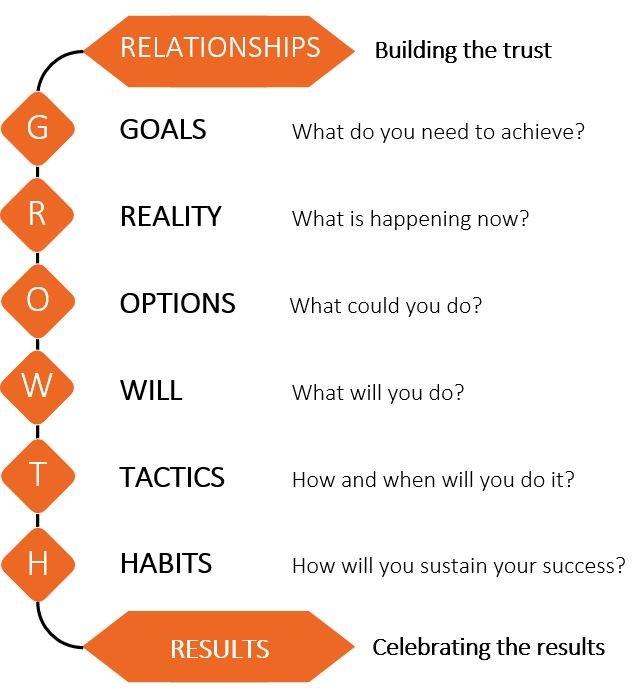
GROWTH Model 
Reflection 
Goals - What do you need to achieve?
I want the students to be able to complete the work that they start in order to achieve the credits that are on offer.
Reality - What is happening now?
Far too many times, the not achieved in the results is because their work is incomplete. They avoid the things they find hard and leave them unfinished. 
Options - What could you do?
I would like to improve how they feel about themselves and their work as they lack confidence.
Will - What will you do?
I will work on mindset throughout the year with activities and information.
Tactics - How and when will you do it?
I will research and read about the subject of mindset.
I will collaborate with the Health and PE departments who already do some of this kind of work in their courses.
I will include activities and information for the students throughout the year.
Habits - How will you sustain your success?
I want to start this kind of work with the students earlier - in Y9 and Y10 then definitely into Y11 so they have habits set up for when the work gets harder.


Goal Number 2

Link to doc


2020 Individual Goal 2 Worksheet (Other)

By…
(time frame)
By the end of the year

I have/I am… 
(present tense) (practice e.g. ‘ing’ verb)
I will have developed and collated a series of literacy based templates that can be used by any of the students in Design and Visual Communication. These templates will rely heavily on SOLO Taxonomy structure.

So that…
(benefit/outcomes)
so that these templates and ways of working become part of the normal flow of working through the design process.


SMART Goals 
Reflection
Strategic -it should align with your overall position responsibilities and your organisation’s annual goals, not some randomly selected one.
This aligns with the Department goal for literacy and development of resources.
Meaningful – if it doesn’t do anything for you, the goal should be re-written and should align to intrinsic motivation.
This will give structure and support for all students doing the subject and enable more detailed writing in analysis work.
Aspirational – where might I see the goal leading me to in my practice that would really make an impact.
It is the analysis of their design work where Merit and Excellence results are so this work will give support to aim high in the students project work.
Risky – how about doing something that is complex, will require you to collaborate and get you outside your comfort zone – but in the understanding that it is the learning that is important, not the achievement of the goal.  Encourage and reward learning from mistakes.
There is a lot of learning, reading for me to do and collaborating with other teachers in order to achieve this goal.
Time-bound   -of course, every goal must have an end-point to keep you focused.  If the goal was not achieved, at least by aiming for something risky, you know a lot more about whatever it is that interested you in the first place.
The time scale is until the end of the year.


GCI  GROWTH.jpg


GROWTH Model 
Reflection 
Goals - What do you need to achieve?
To improve the students written ability when writing analysis notes with their design work.
Reality - What is happening now?
They produce notes that lack depth and understanding in what they have designed and also lack literacy structure.
Options - What could you do?
Research, read and collaborate with other teachers.
Will - What will you do?
Produce a range of resources that use SOLO as the main structure to support writing in DVC.
Tactics - How and when will you do it?
I will produce and collate resources onto the class site where they can be accessed by all the students and linked to during the project flow when needed.
Habits - How will you sustain your success?
Use and refer to them at all year levels.


Wednesday, May 8, 2019

Year 13 teaching Year 7 and 8

My Year 13 class have visited one of our local primary / intermediate schools this week. Two of them visited Glen Taylor school at the end of last term to talk about effective logo design. Blog post here.

This week the whole class went so they could start to redesign their logos with them.
We had a talk the day before about what we would focus on and how they would do it.
We decided to all work in circles, focus on using guide lines for lettering, simplifying the image of the mountains used and simple font choice.

The Year 13 students did really well. They presented to the whole group of Year 7 and 8 students to start with, asking them questions about what they did during the last visit and reminding them what they talked about.
The Y7 and Y8 students then sat in groups and my senior students worked with groups. They moved around the groups so they could help lots of different students.


On the planning day and as we were travelling there, they were very nervous and two of my students didn't turn up that morning so they could avoid going. The 6 students who went did really really well. Their confidence grew as the students listened to them and followed their instructions as they were demonstrating.
At the end of the session, they didn't want to leave.


Thursday, May 2, 2019

Breaking the Labels

I told my students :-
"Don't label people"
We then did the exact opposite.

I wrote these labels up on the board ...


Detail - focussed on the smallest details and spend an hour on a tiny part of a design
Final Product - focussed on the finish, the end of the task / project etc, not caring about the process and journey to get there
Perfectionist - everything must be perfect and if it is not it gets ripped out of the sketchbook or rubbed out.
Slow pants - everything takes forever to complete
I can't draw - their negative self talk makes them unable to move forward.

After explaining what each of these meant, I gave the students a couple of sticky notes to label themselves.


"but you told us not to label people!!"
Exactly!, but you label yourselves every day and these labels stop you from making any progress with your design projects.

Don't Label Yourself!

Wednesday, May 1, 2019

Mindset - Loosening Up

I have a mixed NCEA Level 1 and Level 2 class. Within that class are students who have done Graphics before and students who haven't. This causes a lot of self doubt in a lot of the students who come in the room thinking they can't do it. They say to me "miss I can't draw", so they talk themselves out of achieving before they even start.
This shows even more now that we are past the research stage and are onto design ideas. They sit and stare at their sketchbooks for lesson after lesson, not feeling able to do anything. I try and sit with them and do some designing with them on loose pieces of paper so they can see me do it and copy. As soon as I walk away, they stop again, and obviously get off task really easily.
I always feel such a failure about this as I struggle to support them over these self made barriers in their mind.

Over the last two days I have tried something different with this class. We came back to school for term two this week and I saw them for the first time yesterday for a single period.
We played warm up games yesterday in the single period.
30 seconds to draw 5 things ... shapes, insects, animals, things that start with the letter A .....
They were slow and too fussy to start with. They soon loosened up and got into it, while not always hitting 5 for various reasons (putting too much detail in, thinking for too long ..)
As you can see, the quality of the drawing was not great but that was not the point. Quickly getting ideas down on paper was the point and beating that "blank page curse".


Today in the double period, we started with that for a few rounds to warm them up again and because not all the students were there yesterday.
Then they got their sketch books out and had to draw in there. They had to draw 10 different designs based on their project in 5 minutes.
They had to remember what they had learned in the 30 second warm ups - draw quickly, don't get lost in details, don't stress about the quality of the drawings.
They launched into this really well. They were nearly completely silent (very unusual with this lot ) and very focussed.


They then had to look at everyone else's work. they walked round the room looking at all the sketchbooks open on the desks. They had post it notes with them and they had to write one word feedback and stick it onto each other's books.
We equated that to getting a like on Facebook or a heart like on Instagram. That warm fuzzy you get when you see that what you have put online has been seen and liked.
Then they had to go round again and write a sticky saying what they liked and why.


After reading the warm fuzzies and the feedback from the rest of the class, they had to look at their own work and write a list of 5 things that they can do to improve one of their designs. I got them to write it as a list first so they could think about it separately to drawing.
Then they had to draw 3 design changes for that chosen design based on their list.
All of these activities had very limited time allowances (5 minutes, 2 minutes, 3 minutes .. ) and I was calling out the countdown as they went.
On these 3 design improvements they had to label what the improvements were that they had done.


They then had to look at each others work again and give marks out of 5 for the design changes work.


The last thing that they had to do was to look at all the work that had been done today and choose one from someone else's work. They then had to draw a design development for someone else and give it back to them personally so they knew who had drawn what.
They were very respectful when doing this and were careful to explain the changes they had done to someone's work and why when they gave it back.


At the end of the session today I asked them for some quick feedback by answering 4 questions for me.


What I noticed the most today was the level of engagement and being on task for the full double period and the amount of work produced in the time. 
I used :-
  • Timed activities for the whole lesson
  • Small times on activities all the way through
  • Peer to peer feedback and marking
  • Giving warm fuzzies before the more detailed feedback so they felt good about their work
  • Giving help and support to each other in the form of designing improvements for some one else.
  • Not focussing on the quality or standard of their drawings but the ideas that they were coming up with.
Three students who absolutely hated today are my three perfectionists. I spoke to them after the lesson and told them I was proud of the way they approached the work and to let them know that I knew they were struggling. They tried really hard and did well.
My boys at the back who struggle with the whole designing process did well today. They produced more work today than they have since we started designing work and finished the research.

My next problem - How can I get this to influence the day to day designing that we have to do? 
And - I was EXHAUSTED at the end of the double period as I was BAM BAM BAM though the whole thing.

Tuesday, April 30, 2019

Mindset Presentation - HOD PE

Today my Year 13 class were really lucky as the HOD of PE at Tamaki College (Mr Brenton Moyes), came to talk to them about mindset and how he did Art and Graphics when he was at school.
They started off being really polite when we asked them if they thought the head of PE was good at drawing. They then relaxed and were more honest. They all answered "no!". He brought in his art boards from school and they were really impressed.


Brenton did a great presentation, talking about :-

  • failure
  • trying again
  • practising
  • improving
  • trying new things
  • being outside of your comfort area


They did a warm up exercise to start with where they had to draw a face by not taking their pencil off the page. They then did it again with less time and had to put more detail in. After comparing their first and second efforts, they had to choose which one they liked the best. 
This was then linked to trying a new thing, not being sure, having another go - a growth mindset.
Brenton then described the process he went through for his art boards and how much trial and error he went through, getting things wrong, improving, trying again. This was linked through to a sports mindset of training and practicing.
I spoke to them afterwards about putting people into boxes when we see them. We all do it and it is normal but we have to be able to break the boxes when we find out more about people.
They are guilty of putting themselves into boxes which is stopping their progress.
The "I can't" mindset related to drawing is killing their creativity in some cases, and the need to be perfect in everything they do is killing it with others.
A great presentation from Brenton today and I will have to get him back to do more as a lot of the class was missing today.

Thursday, April 11, 2019

Senior students present to Year 7 and 8

Two of my lovely NCEA Level 3 students went to Glen Taylor School today to talk to them about logo design. The Year 7 and 8 students have been designing logos for their school houses and they wanted the advice of some Tamaki College design students about the best way to develop their designs.

Vaifoa and Sella were very brave, standing in front of approximately 80 students in the school auditorium and talking to them about logo design all together. They then worked with smaller groups as the students brainstormed their thoughts.
We looked at famous designs and thought about what made them effective. The students then looked at the designs they have produced already and highlighted all the good parts that can be used in the development stage.
The next step is next term when my whole Level 3 class will visit and help them with their design developments.

Very proud graphics teacher today.


Friday, April 5, 2019

Negative Mindset

This week I made a Towers of Hanoi game on the laser cutter and in the workshop.
It has been sitting on my desk while I build an Intermediate Technology project around it so the students have been seeing it and having a go.

It has proved to be a fascinating insight into the mindset that the students bring to their project work in Design and Visual Communication.

My Year 13 students are a mixed bunch of some who have done NCEA Level 1, Level 2 DVC and those who have not done graphics since they were in year 9 and 10.

My three boys who have not had any NCEA DVC experience were shy of trying the new game. One had a go, one was very reluctant but has a go eventually while hiding behind his sketchbook and one refused to have a go at all.
My two girls with no experience refused to have a go.

To day, student "A" tried again but still his behind his book. Then he hid behind stories of completion and how he made it under the mathematical minimum number of moves. He kept trying. I sat with him and gave him a few nudges, winks and finger points quietly. He made it in the 31 moves with help, then he did it again without hiding, in front of everyone by himself.

I chatted with him afterwards.

How was just now different to yesterday?
"you helped me"
What about when you did it yourself?
"I had practised"
Why were you hiding to start with?
"I didn't want to look stupid in front of everyone"
What about now?
"cos I'm the man miss!"
Yeah, yeah, yeah....

This was a fascinating insight today. This is exactly how they approach their design work.

  • They hide their work by facing into the corner while doing it.
  • They hide the parts they don't like by rubbing them out of throwing them in the bin.
  • They sit and not do the work at all.
  • Occasionally avoid the whole situation by organising something else to do during my lesson.
My next step is to try and get them to understand the importance of the "design journey". It is not all about the finished "polished" product / drawing. They expect everything to be perfect and get very disheartened when it is not.

Friday, March 22, 2019

Inquiry Question 4

Begin to collect evidence and data  and come to the next session ready to share your preliminary findings about the nature and extent of the student challenge i.e. using your baseline student data and evidence.

I have collected evidence on the individual students on my class - blog post here.
I have collected historical data of Year 13 students doing NCEA Level 3 Design and Visual Communication - blog post here

Also, as part of my personal goals this year, I am looking at mindset as a barrier to learning - blog post about my goals here
As part of this, I have been lucky to have received input from Pippa Lawler from Mint Education. She gave me a growth mindset model questionnaire to do with students to see where their thinking is now and where it is later when I have done some work with them about this.
I gave these questions to my students today. Here are the results.


Key competency - THINKING SKILLS
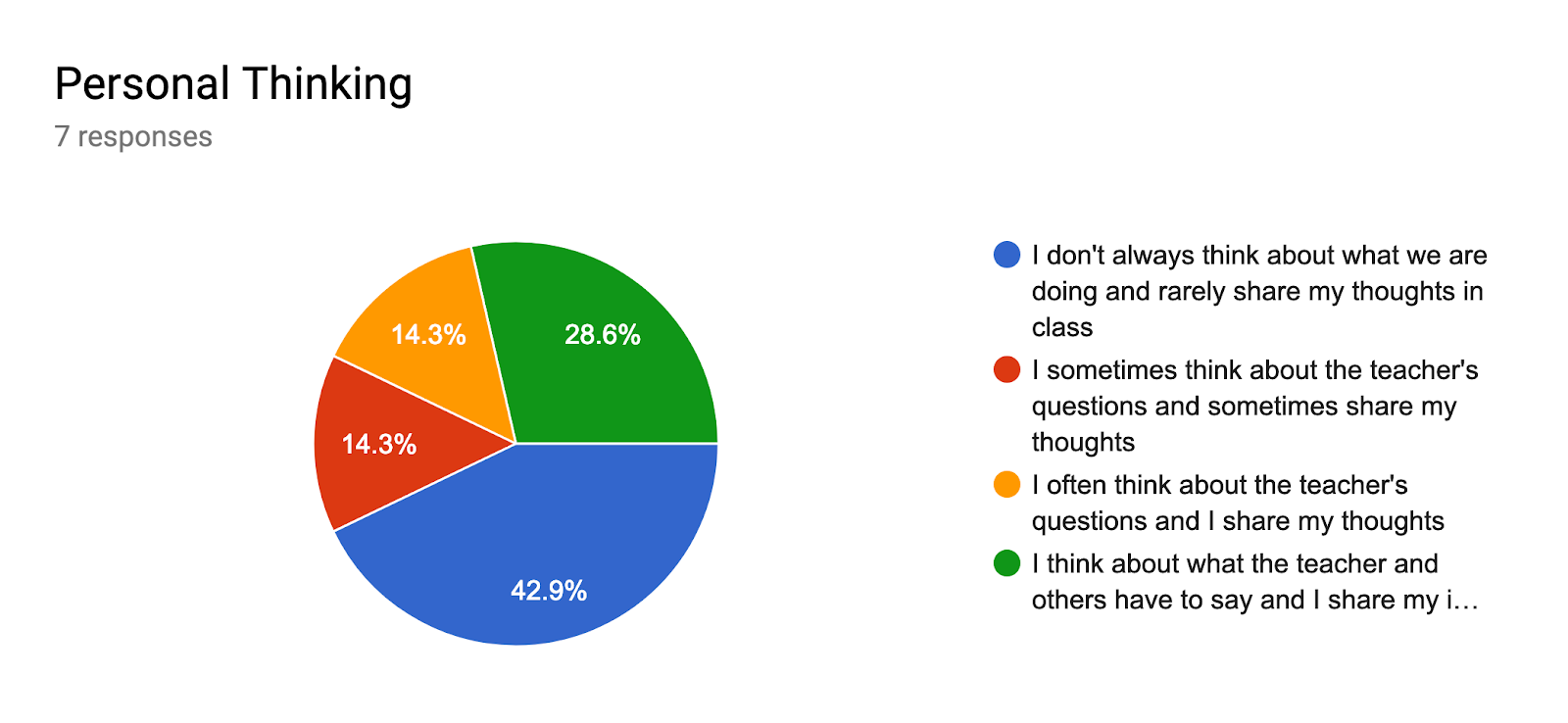
Forms response chart. Question title: Personal Thinking. Number of responses: 7 responses.
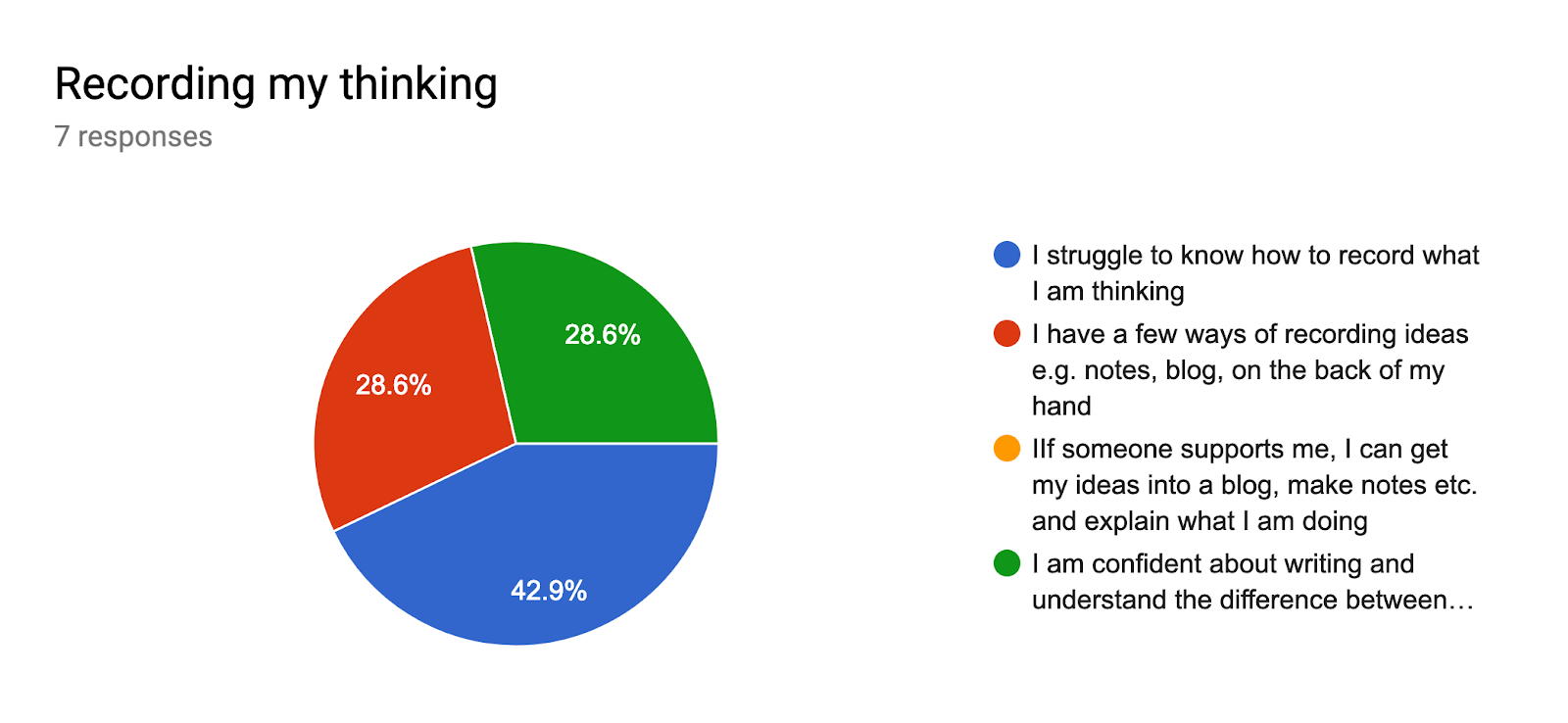
Forms response chart. Question title: Recording my thinking. Number of responses: 7 responses.

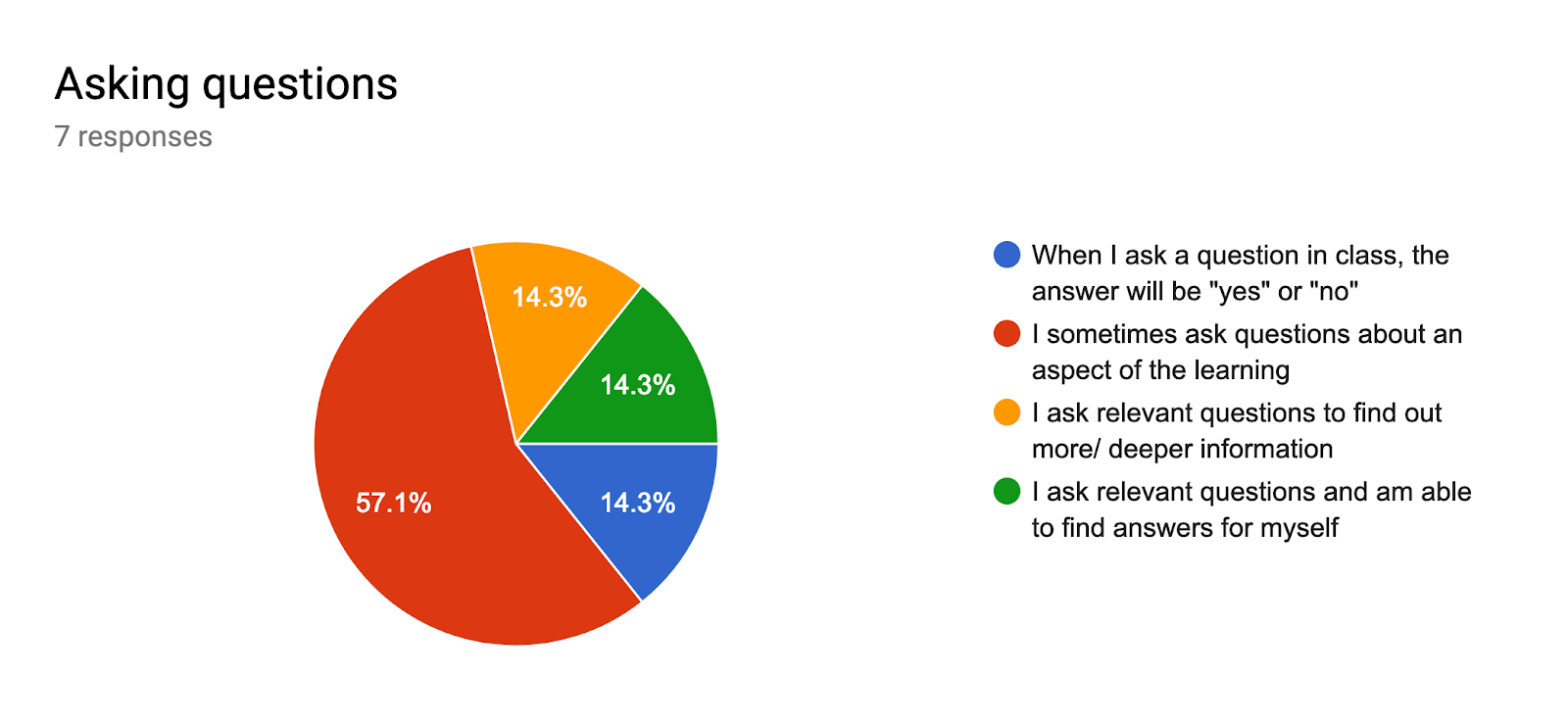
Forms response chart. Question title: Asking questions. Number of responses: 7 responses.

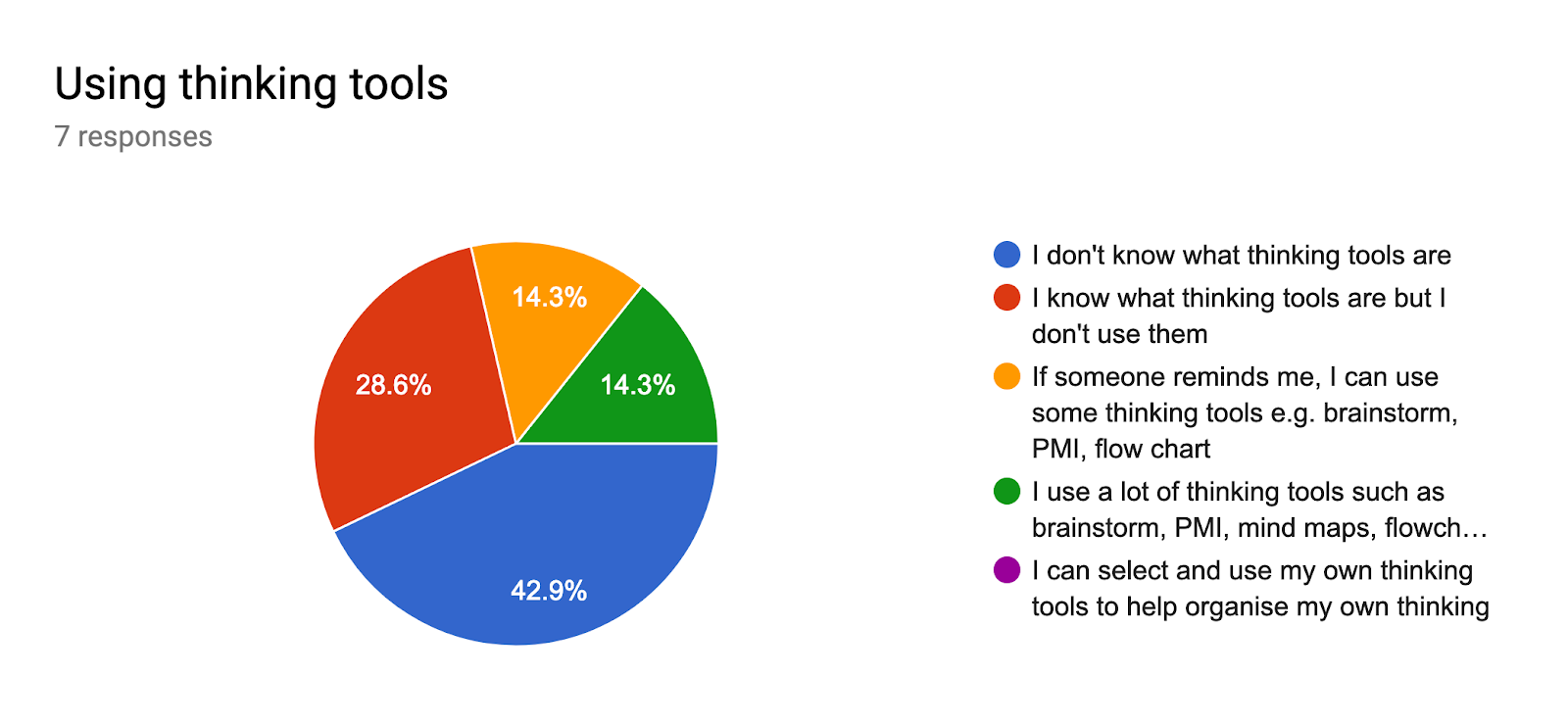
Forms response chart. Question title: Using thinking tools. Number of responses: 7 responses.


Key Competency - RELATING TO OTHERS
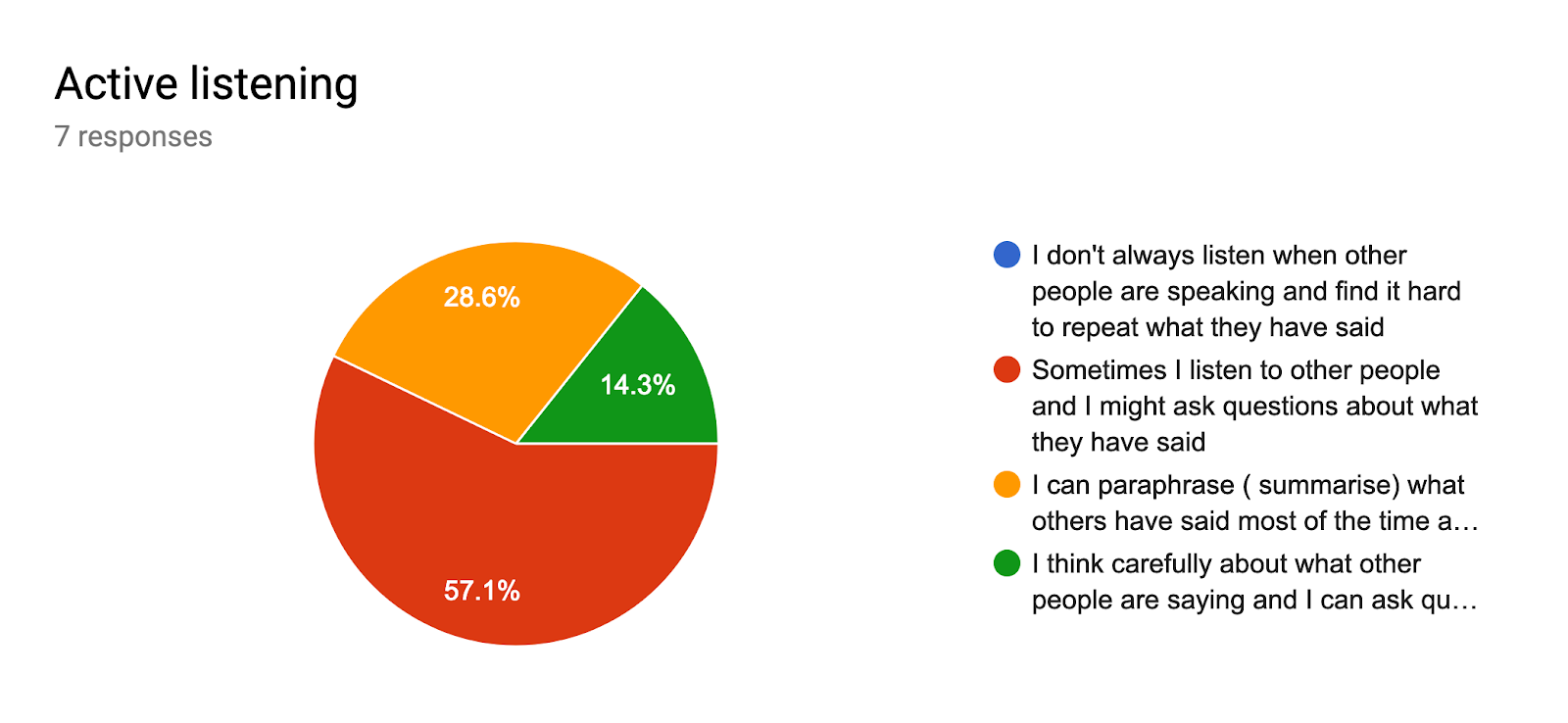
Forms response chart. Question title: Active listening. Number of responses: 7 responses.

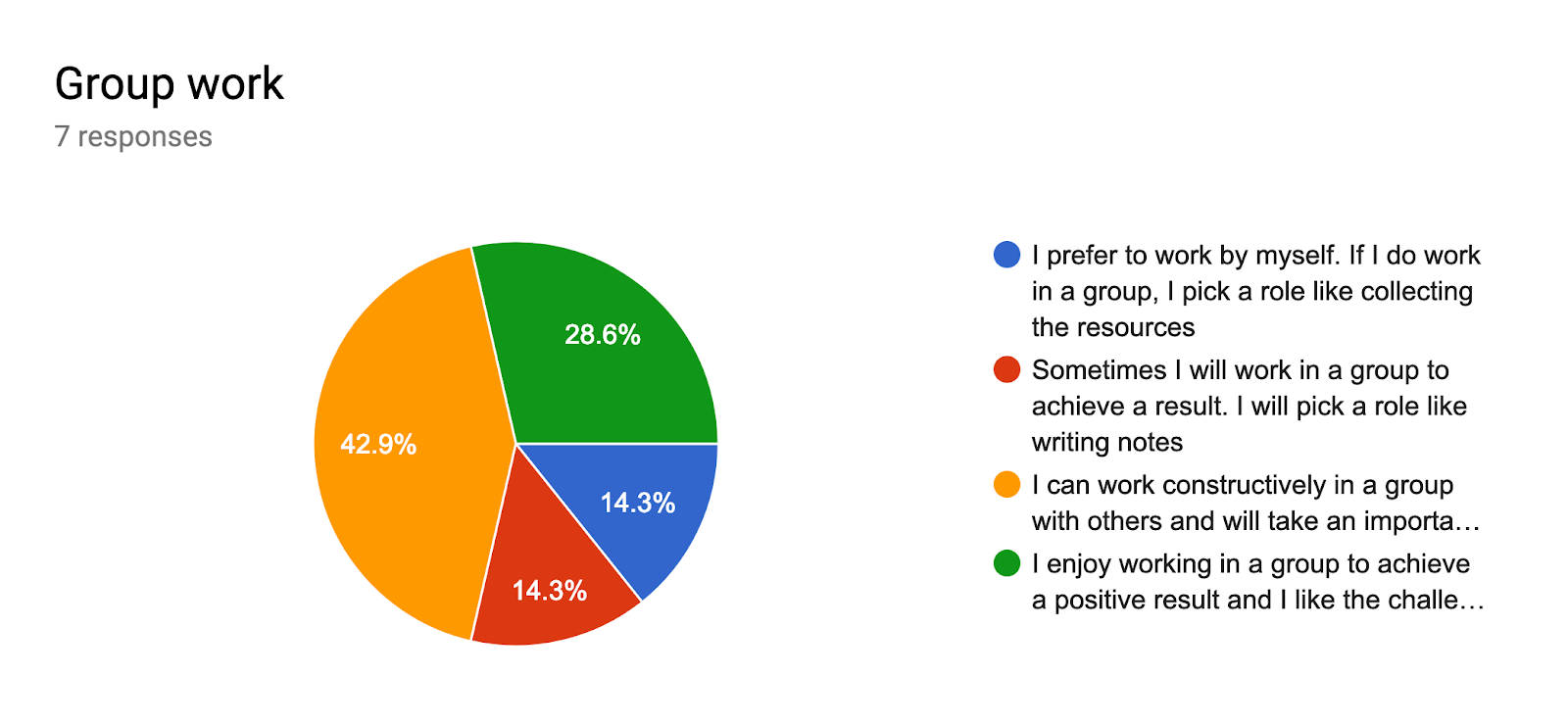
Forms response chart. Question title: Group work. Number of responses: 7 responses.

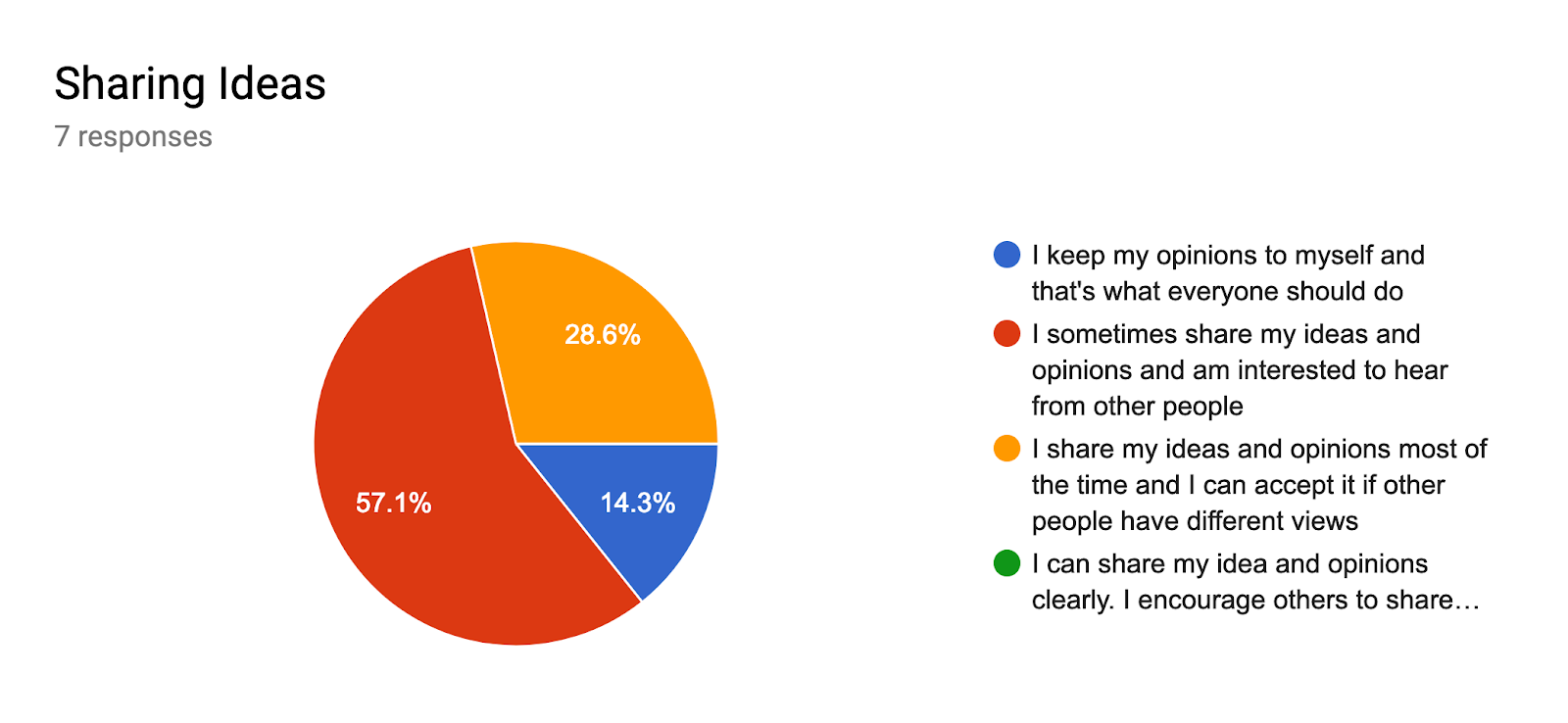
Forms response chart. Question title: Sharing Ideas. Number of responses: 7 responses.

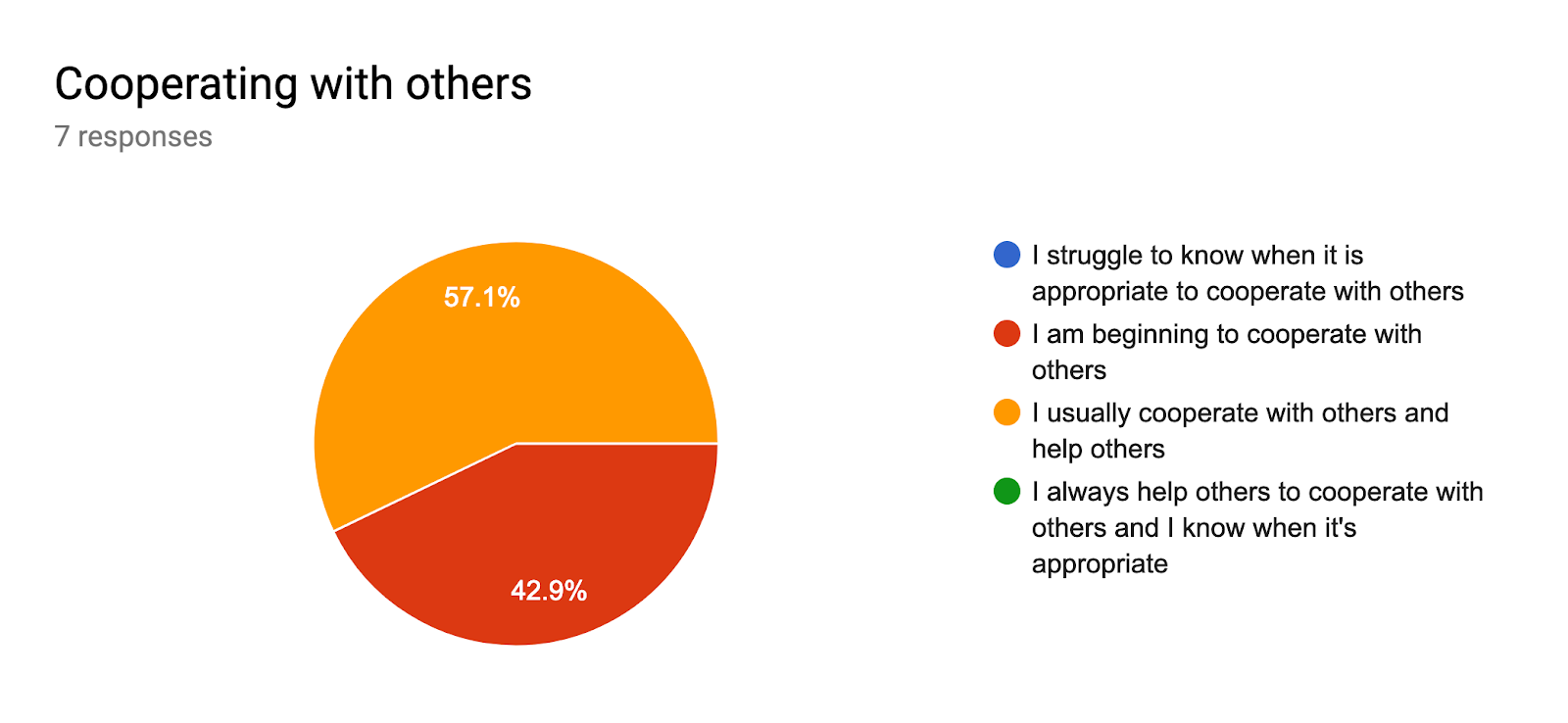
Forms response chart. Question title: Cooperating with others. Number of responses: 7 responses.

Key Competency - UNDERSTANDING LANGUAGE, SYMBOLS AND TEXT
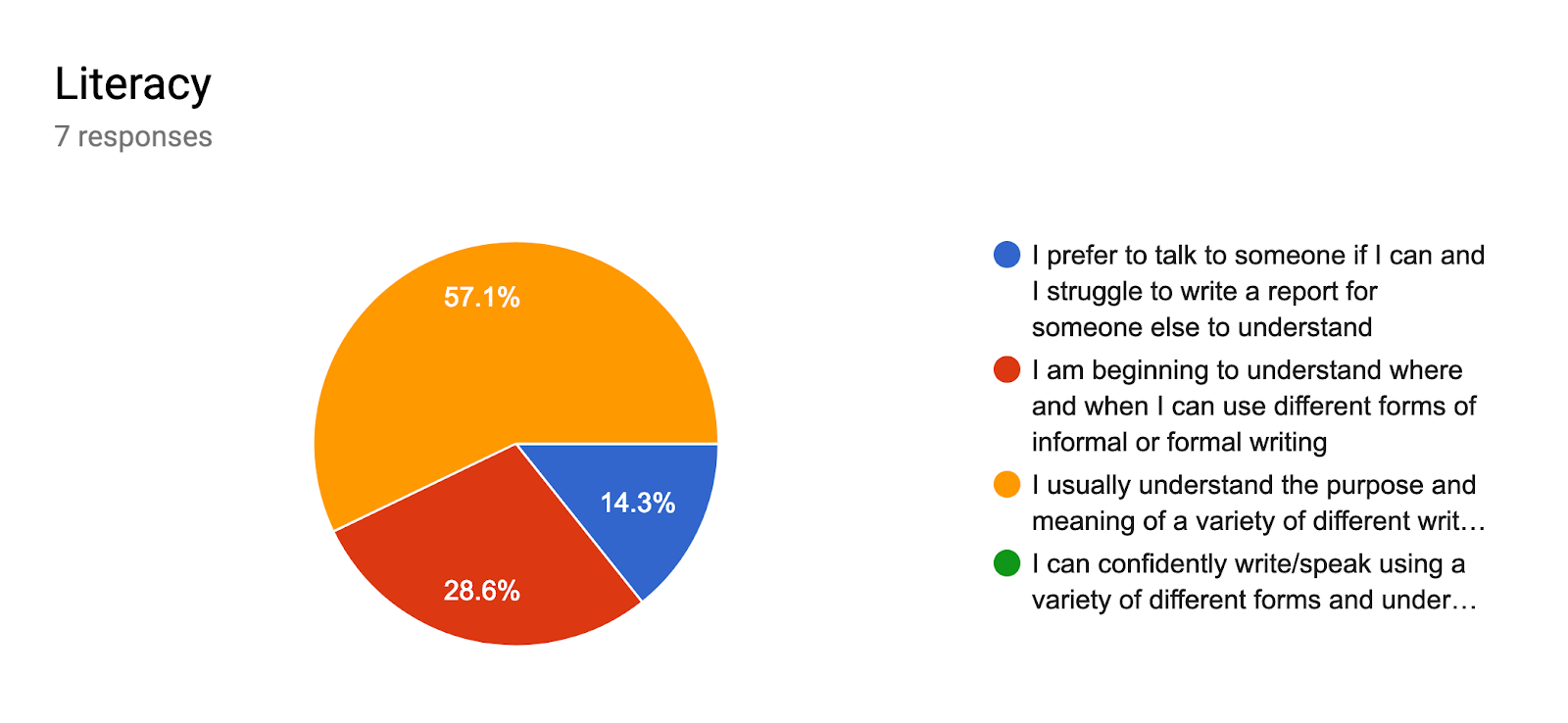
Forms response chart. Question title: Literacy. Number of responses: 7 responses.

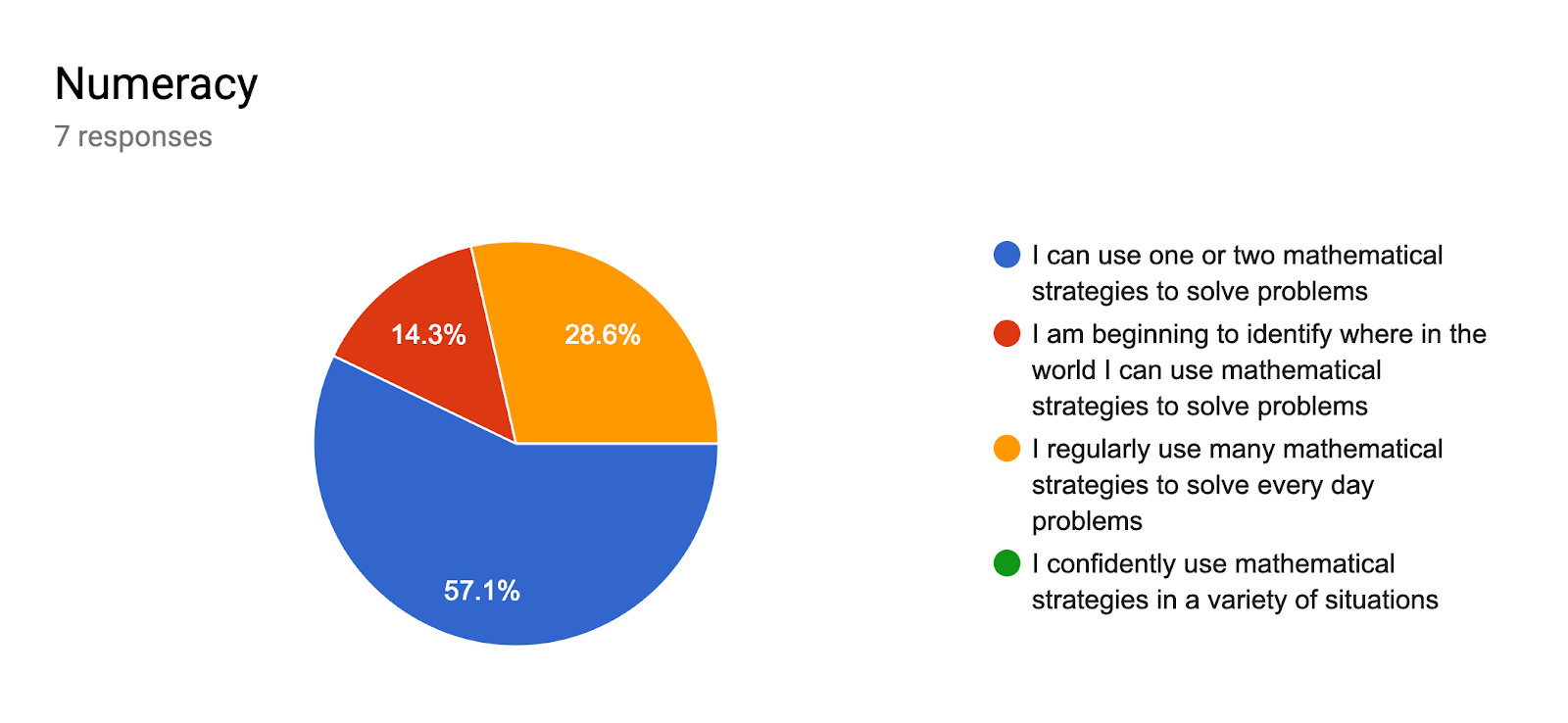
Forms response chart. Question title: Numeracy. Number of responses: 7 responses.

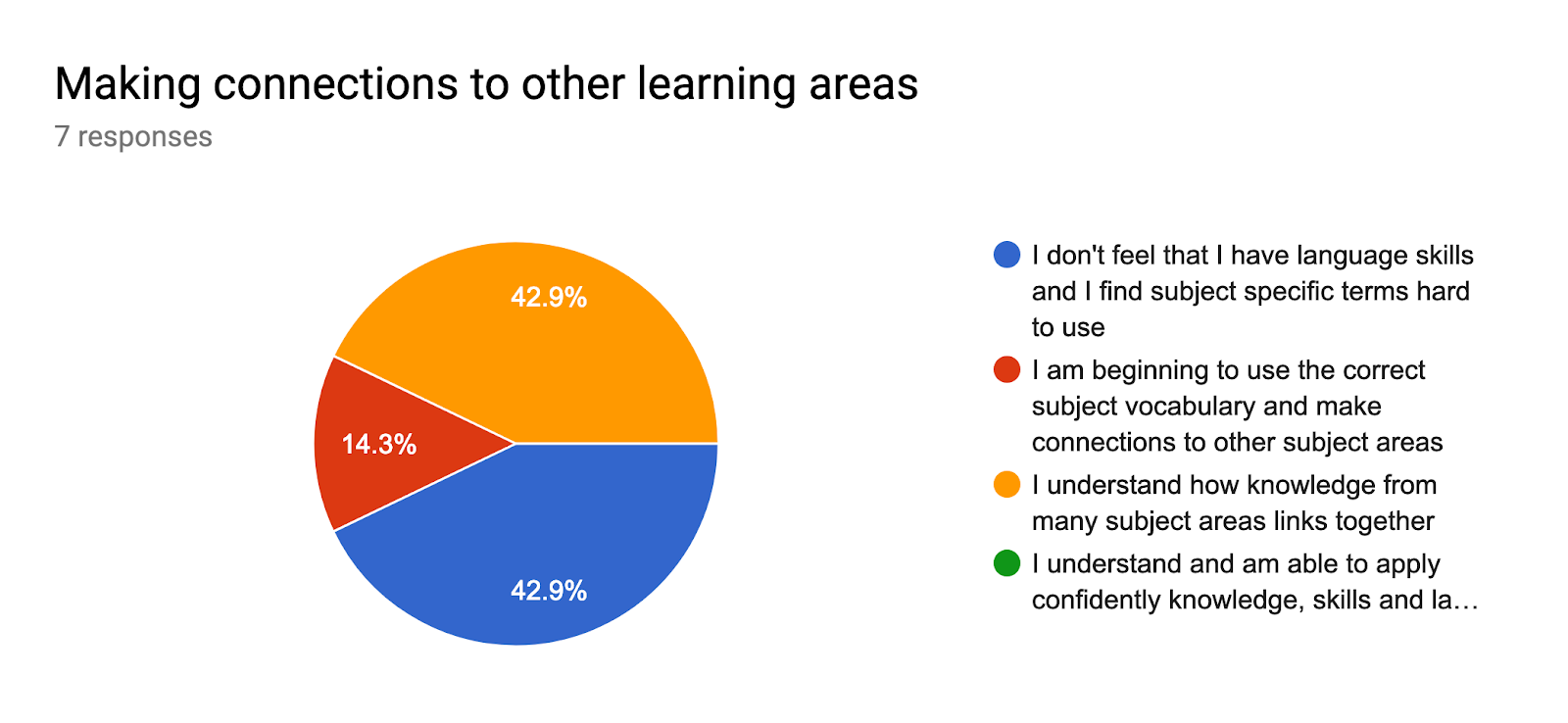
Forms response chart. Question title: Making connections to other learning areas. Number of responses: 7 responses.

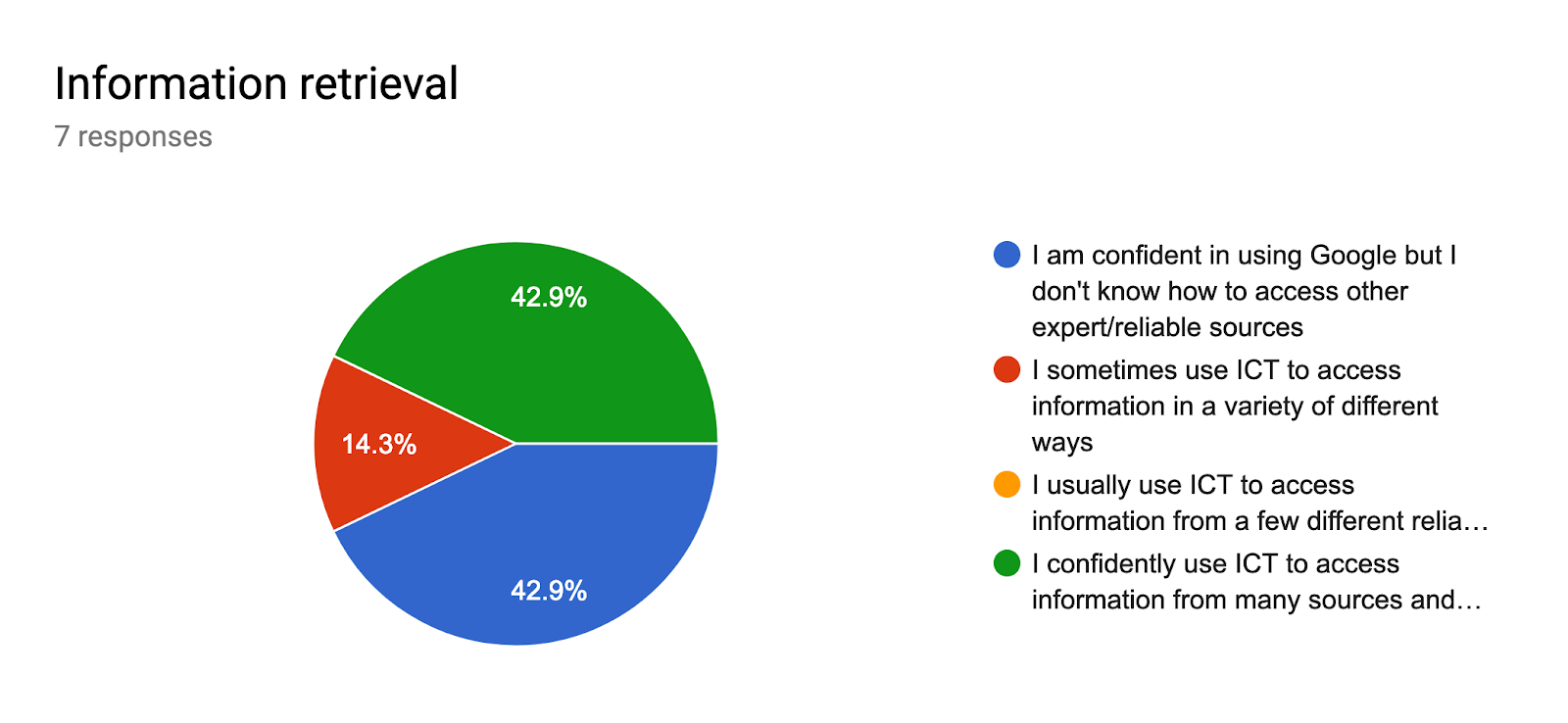
Forms response chart. Question title: Information retrieval. Number of responses: 7 responses.

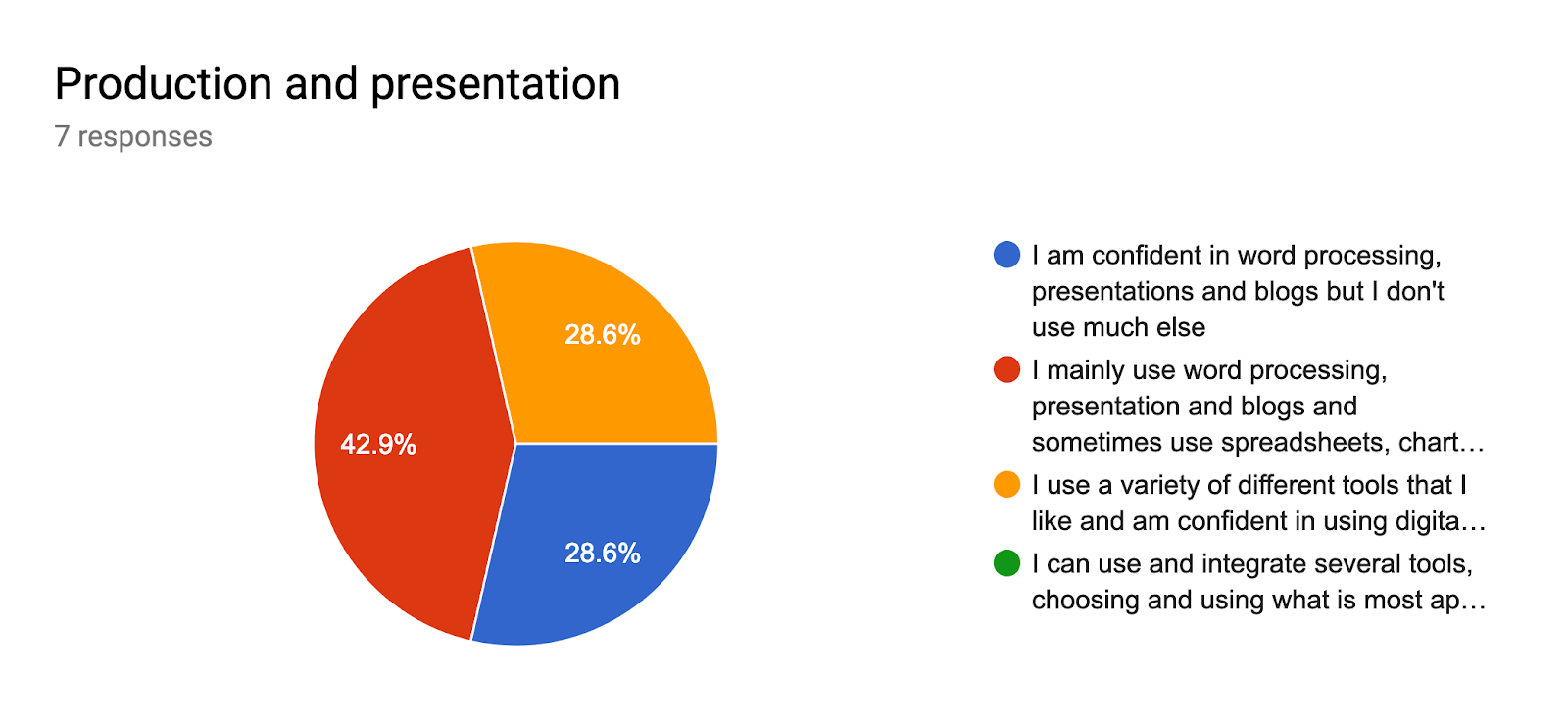
Forms response chart. Question title: Production and presentation. Number of responses: 7 responses.

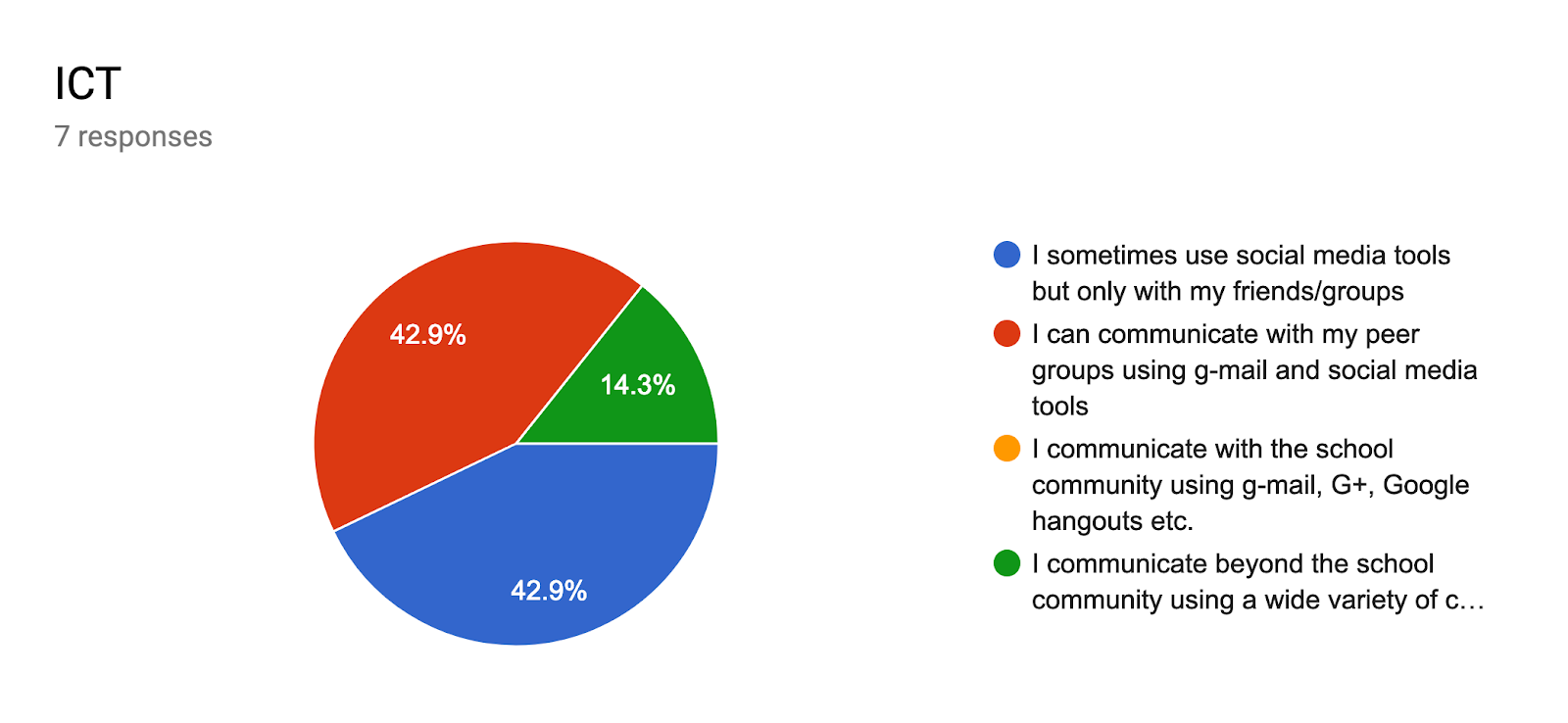
Forms response chart. Question title: ICT. Number of responses: 7 responses.

Key Competency - SELF-ORGANISATION AND MANAGEMENT
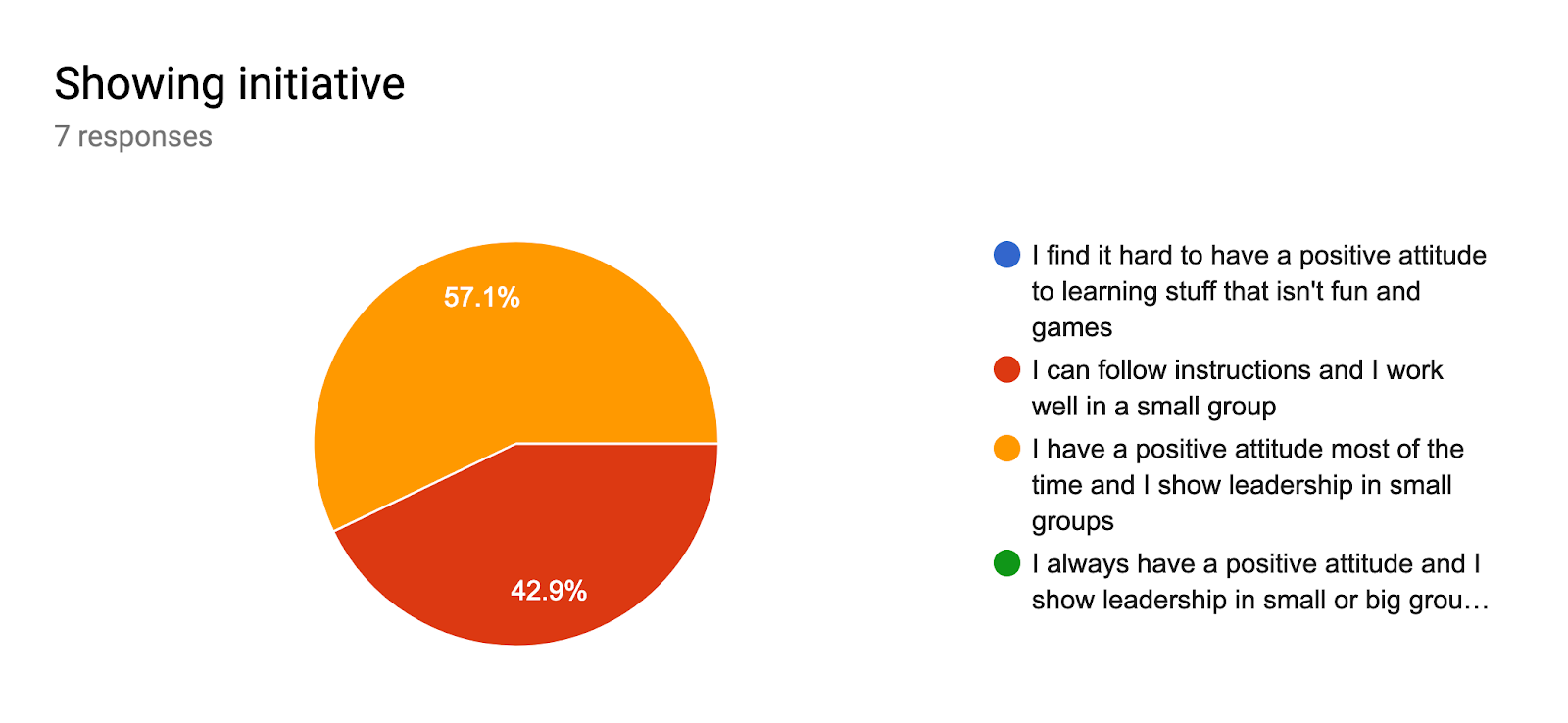
Forms response chart. Question title: Showing initiative. Number of responses: 7 responses.

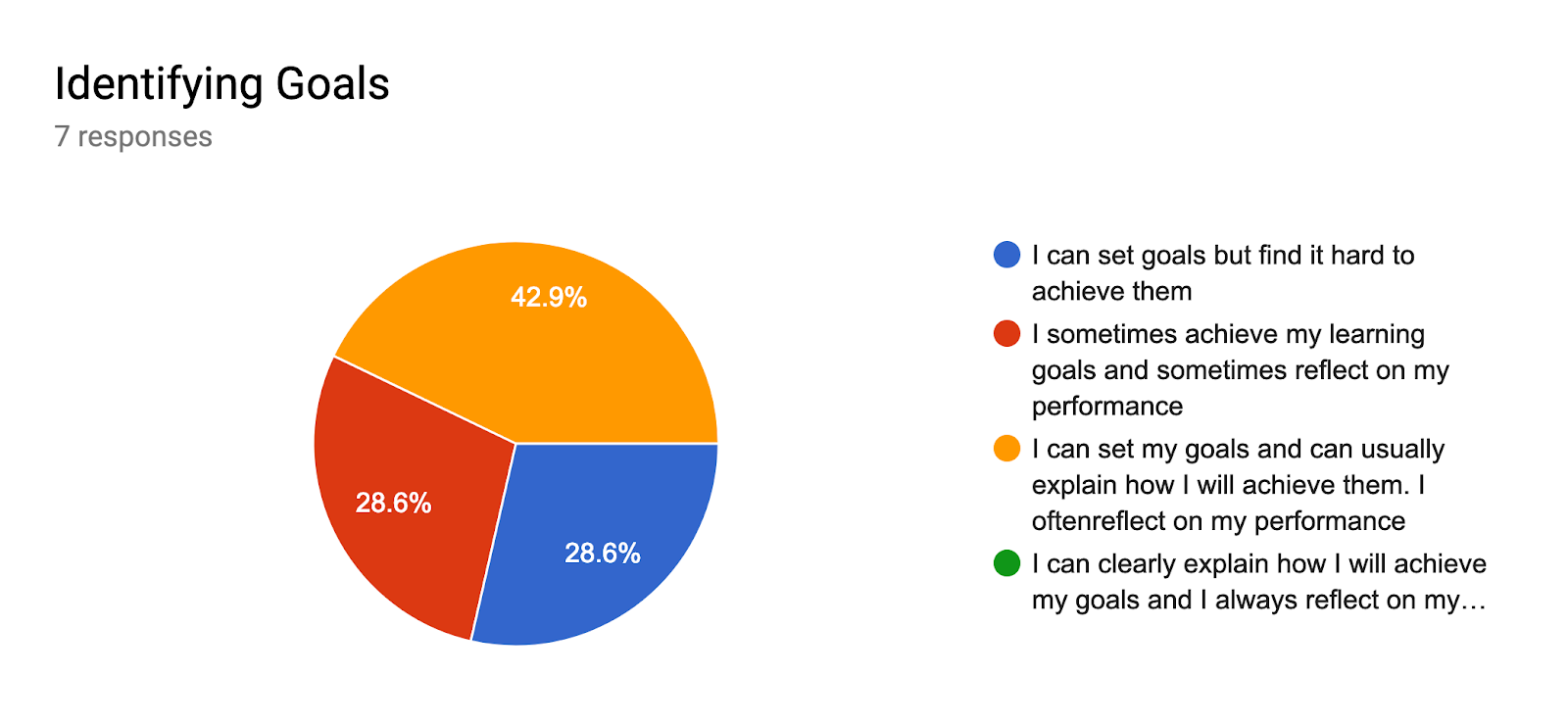
Forms response chart. Question title: Identifying Goals. Number of responses: 7 responses.

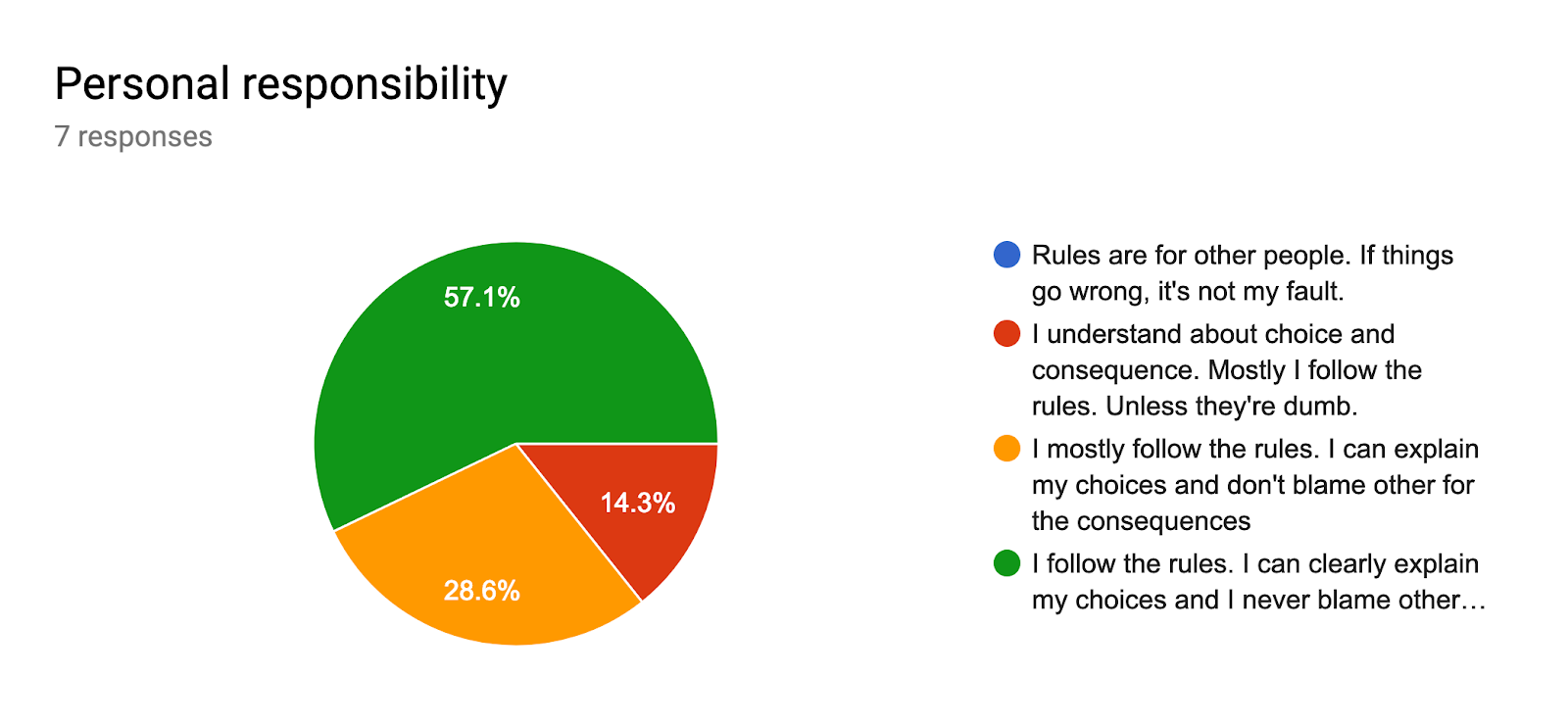
Forms response chart. Question title: Personal responsibility. Number of responses: 7 responses.

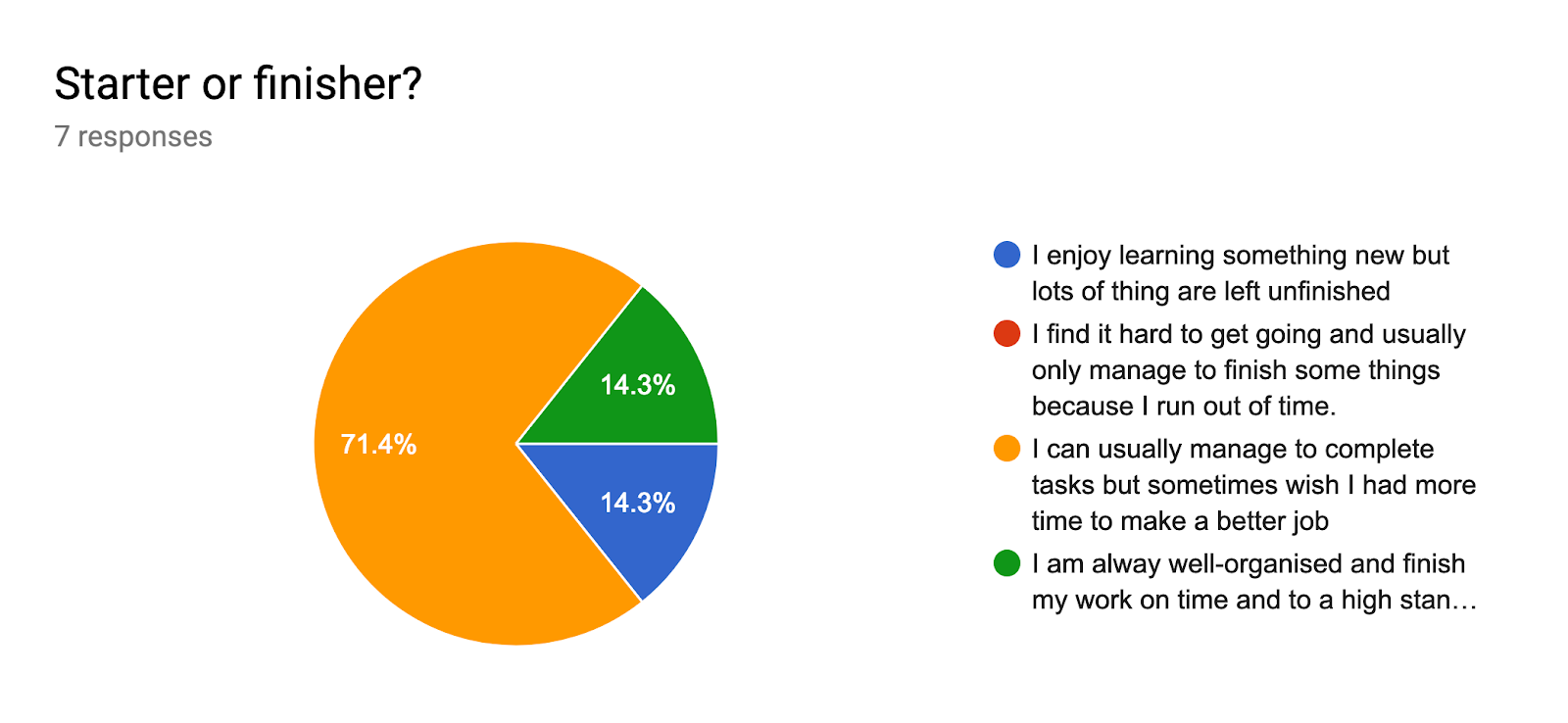
Forms response chart. Question title: Starter or finisher?. Number of responses: 7 responses.

Key Competency- PARTICIPATING AND CONTRIBUTING
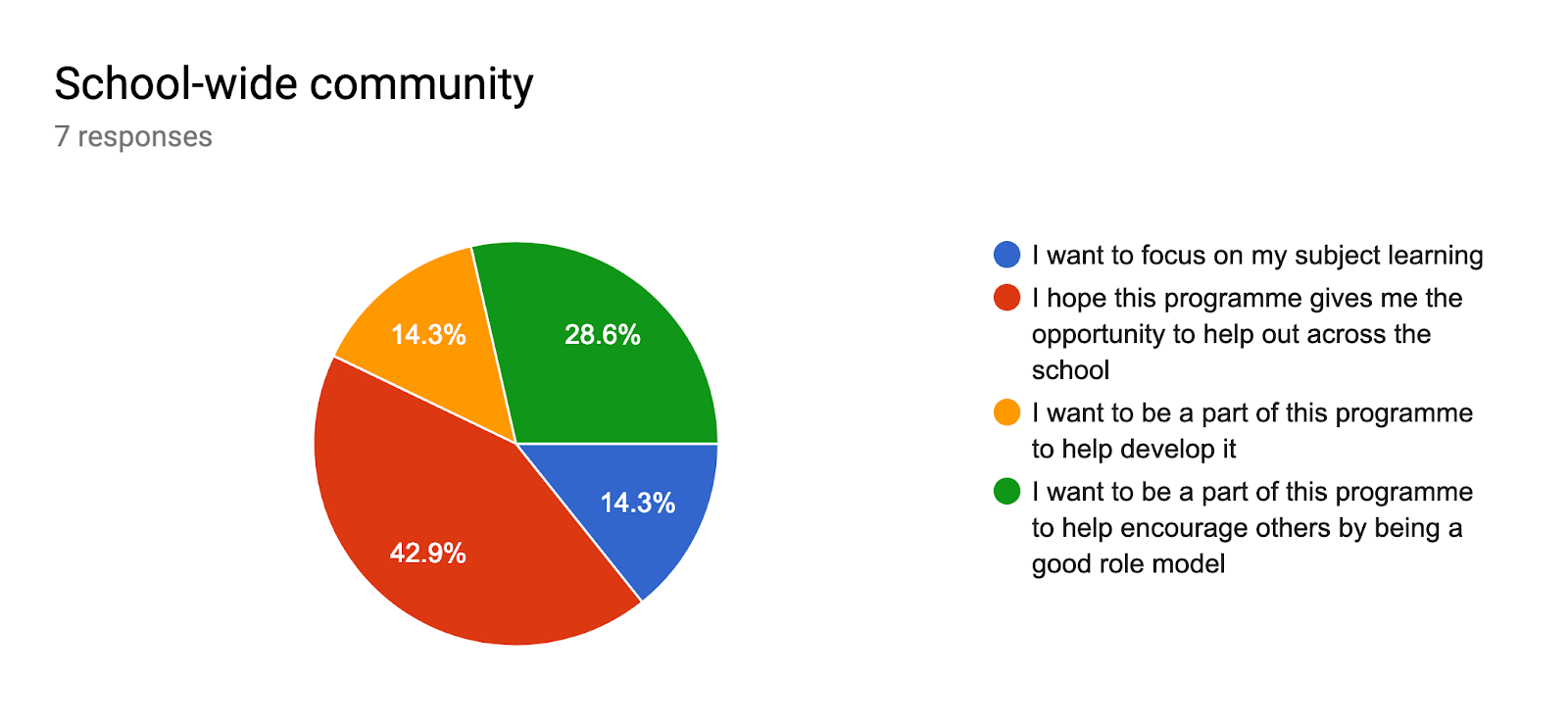
Forms response chart. Question title: School-wide community. Number of responses: 7 responses.

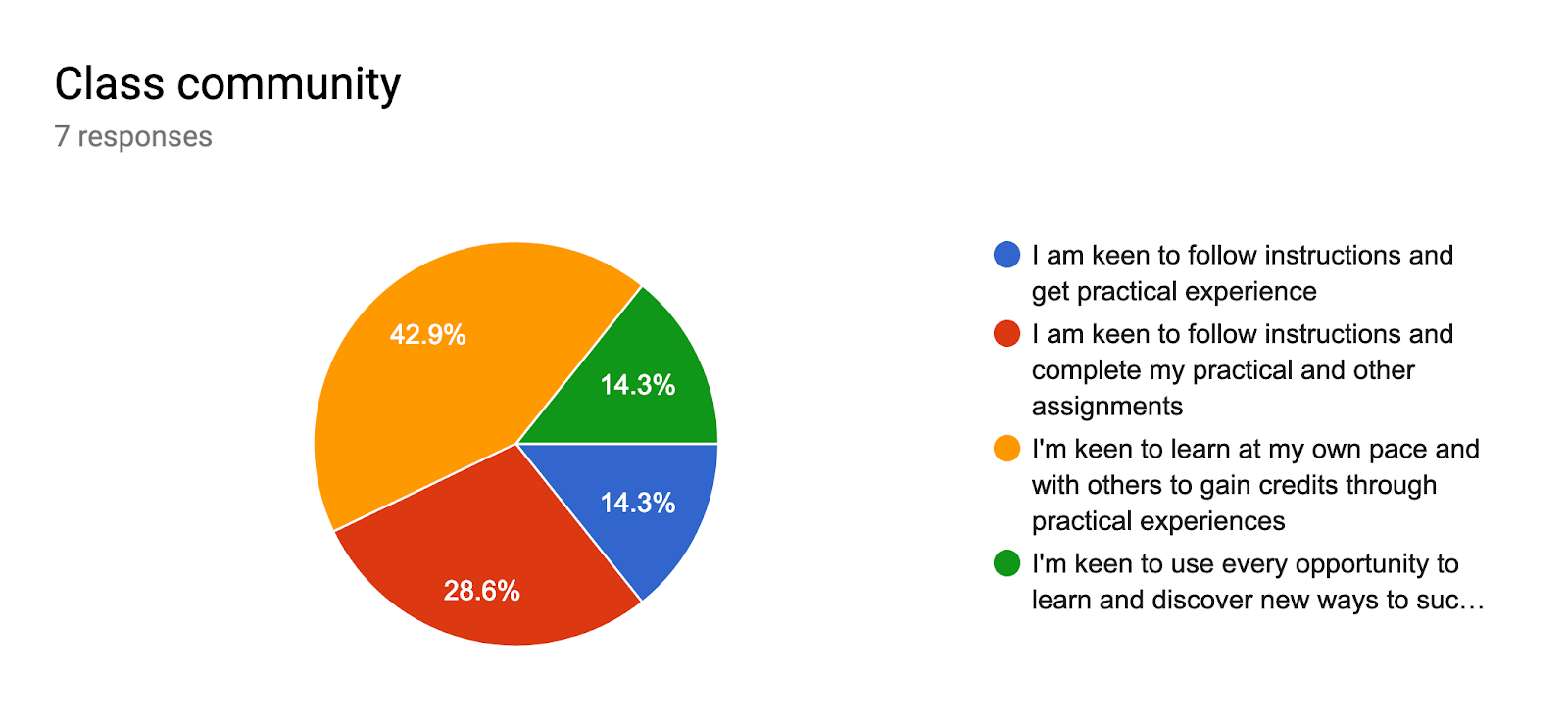
Forms response chart. Question title: Class community. Number of responses: 7 responses.

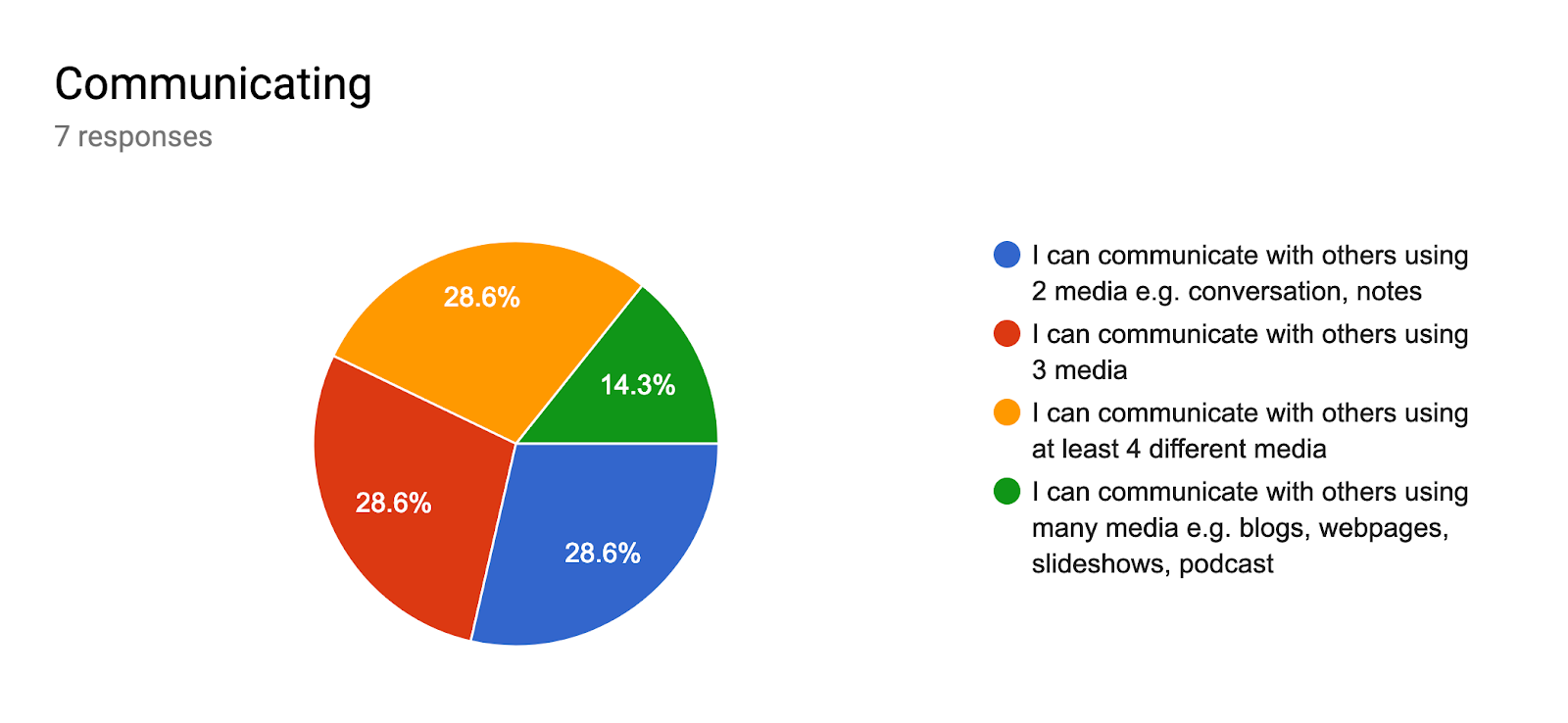
Forms response chart. Question title: Communicating. Number of responses: 7 responses.

Challenges
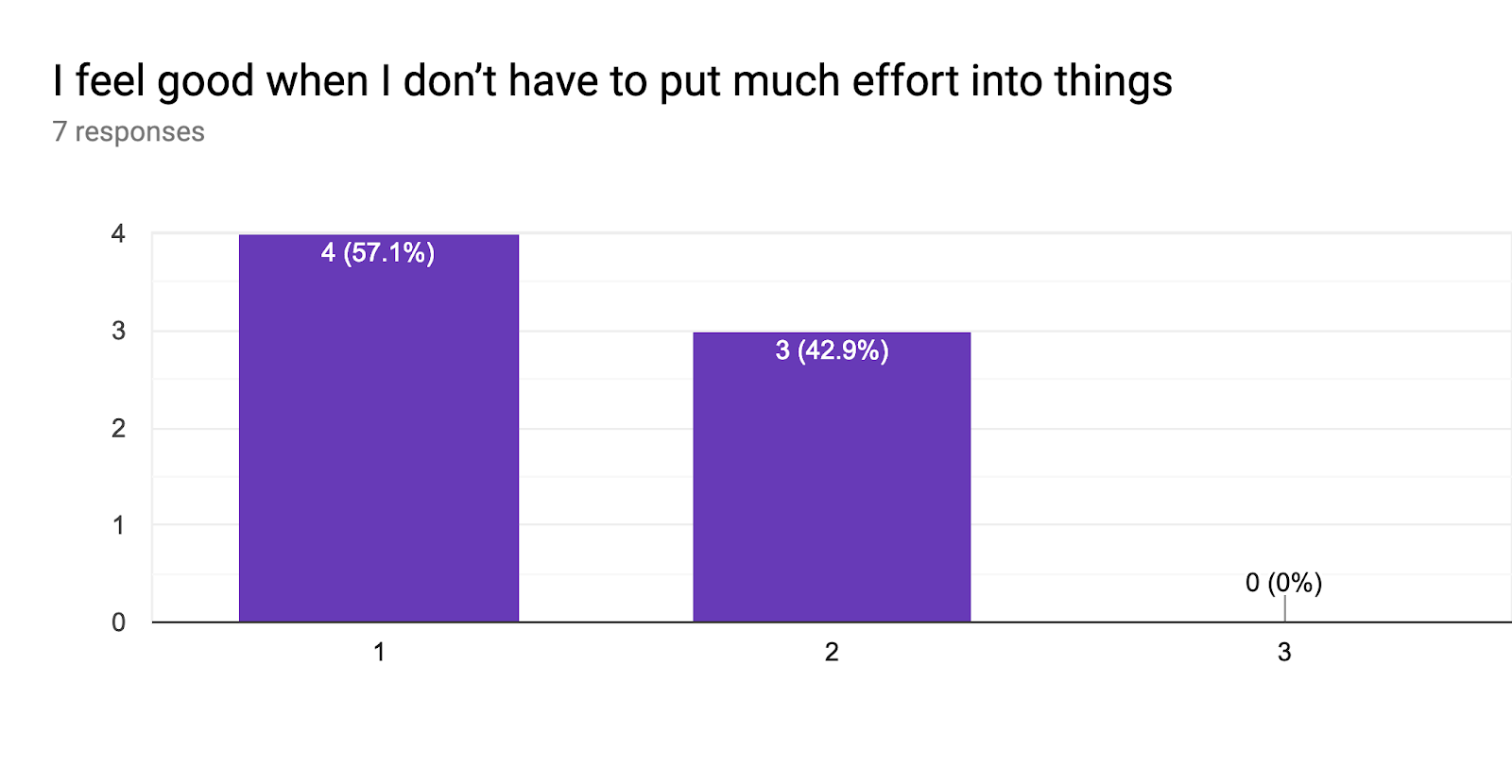
Forms response chart. Question title: I feel good when I don’t have to put much effort into things. Number of responses: 7 responses.

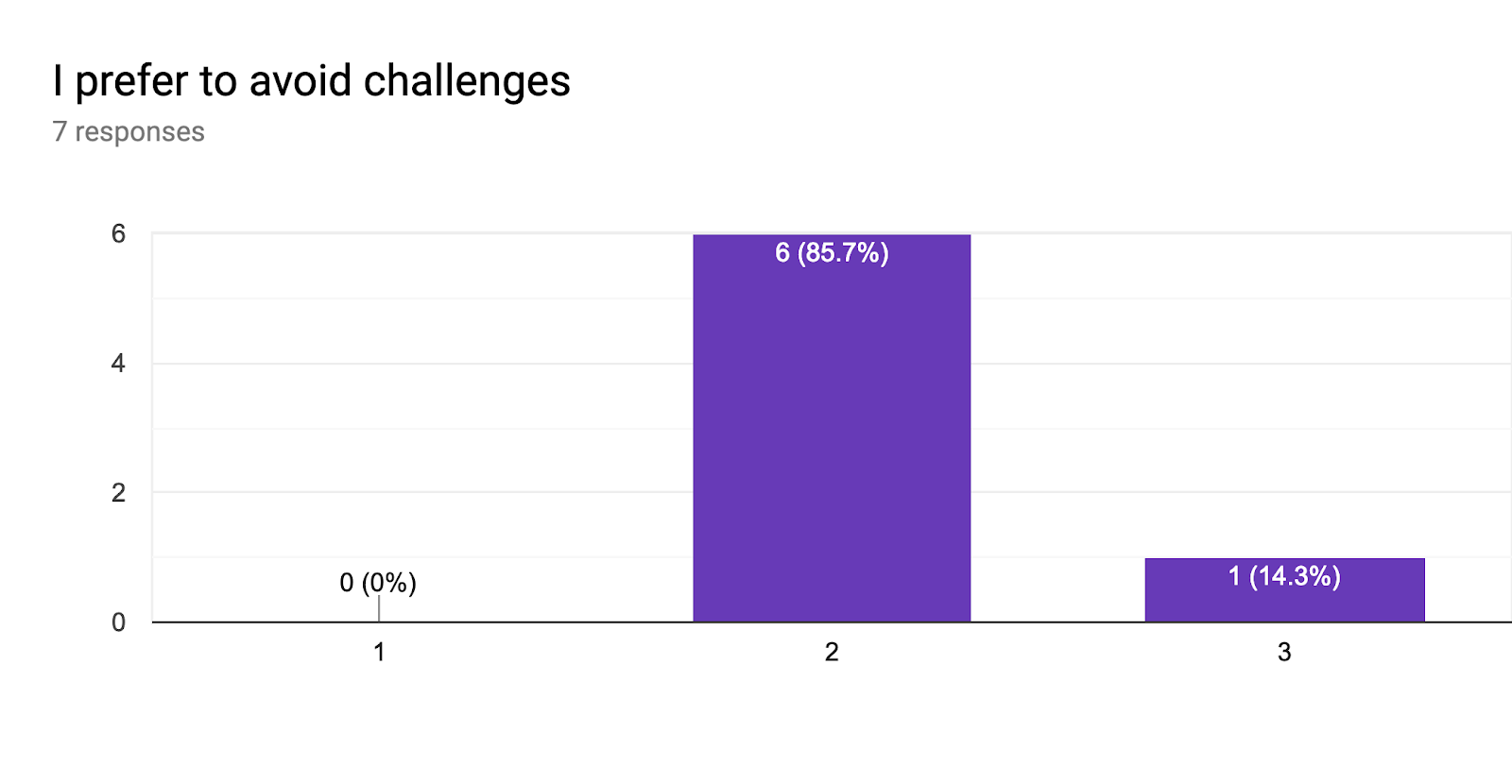
Forms response chart. Question title: I prefer to avoid challenges. Number of responses: 7 responses.

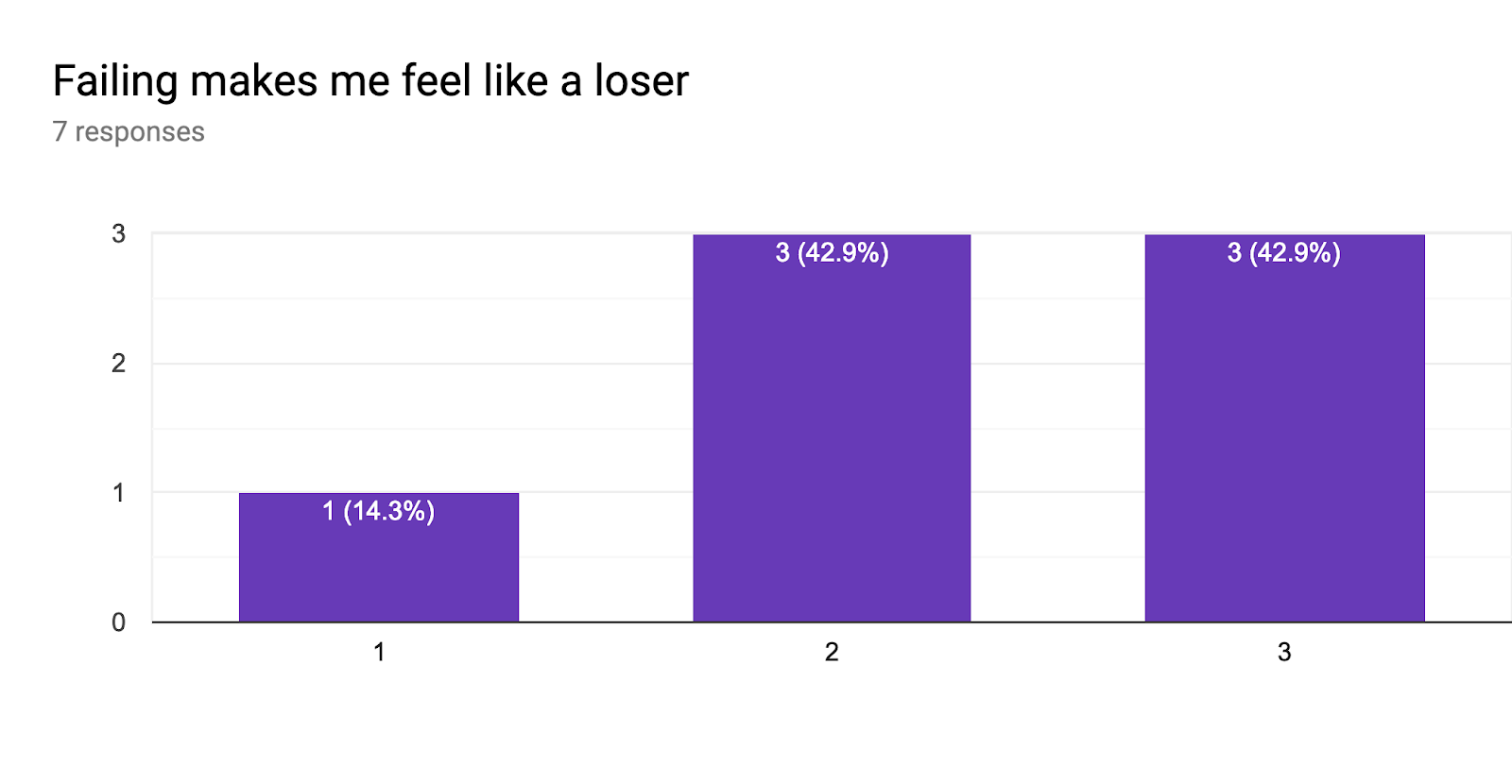
Forms response chart. Question title: Failing makes me feel like a loser. Number of responses: 7 responses.

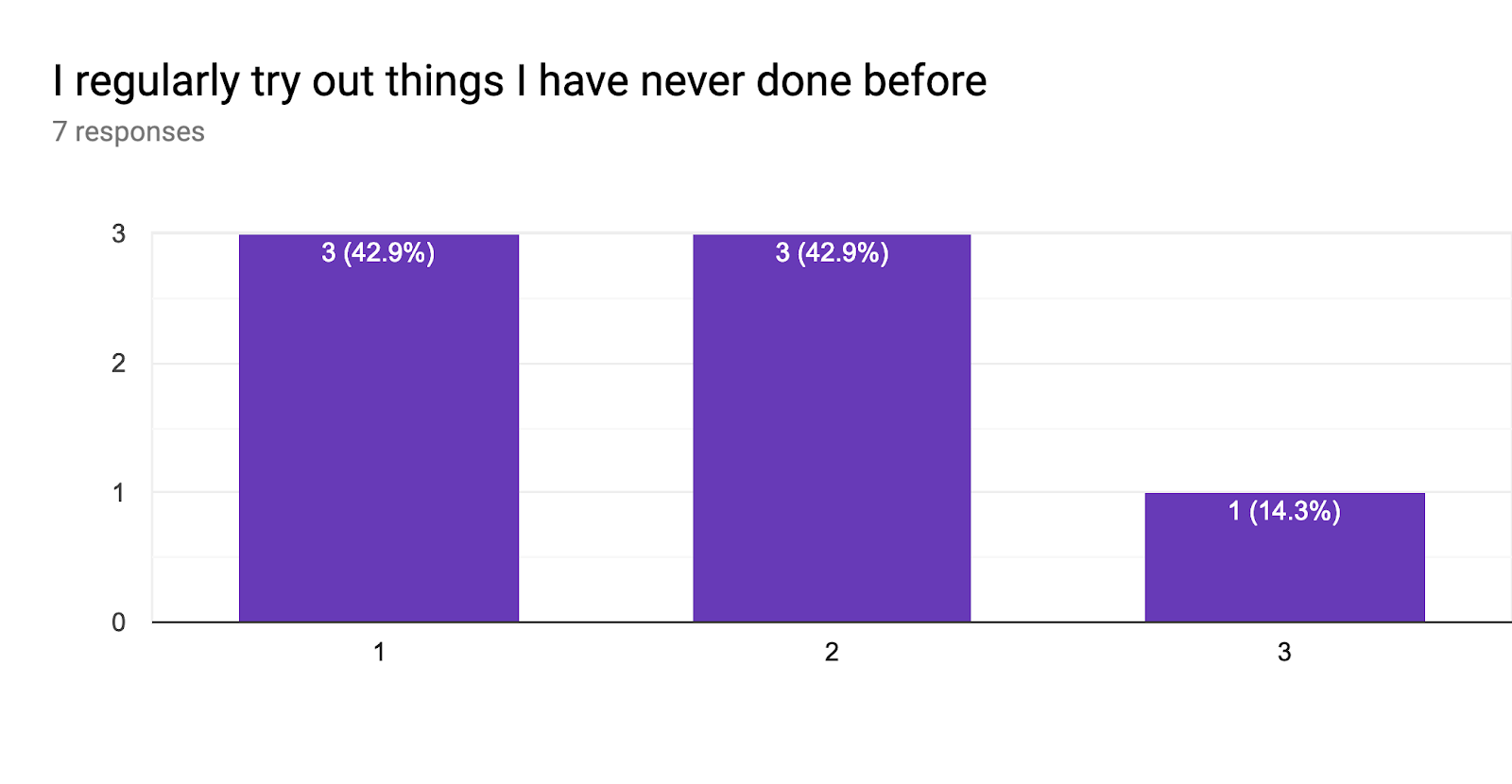
Forms response chart. Question title: I regularly try out things I have never done before. Number of responses: 7 responses.

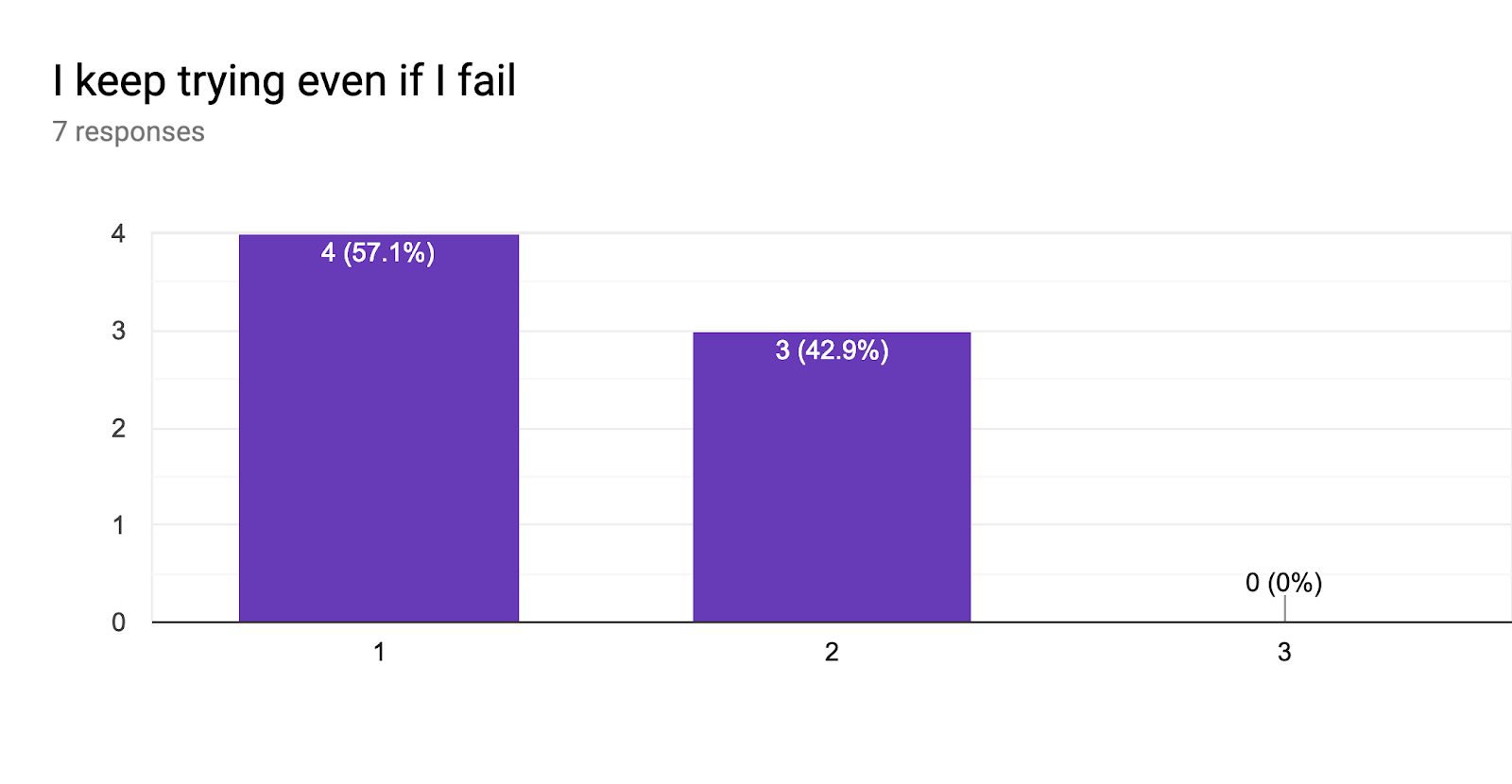
Forms response chart. Question title: I keep trying even if I fail. Number of responses: 7 responses.

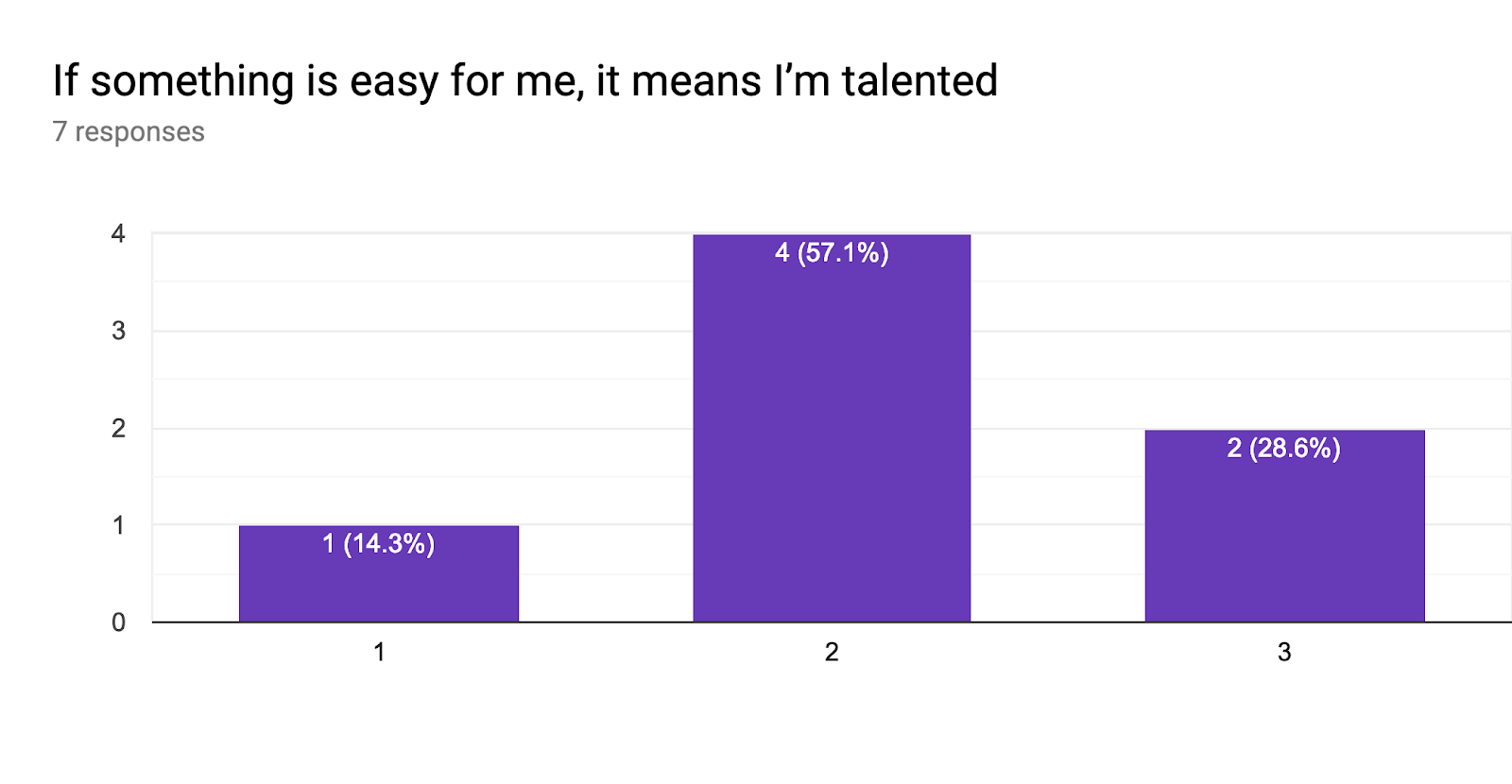
Forms response chart. Question title: If something is easy for me, it means I’m talented. Number of responses: 7 responses.

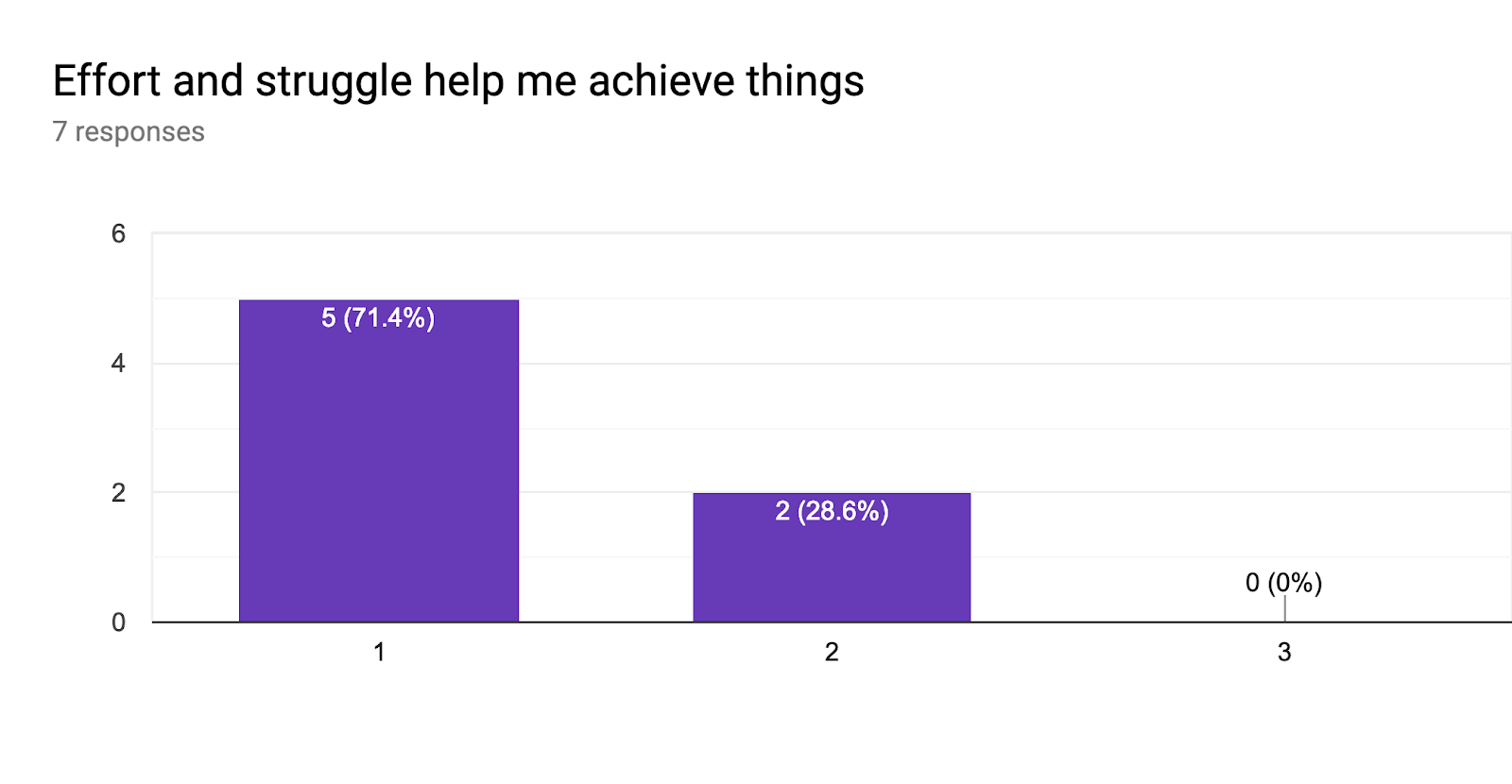
Forms response chart. Question title: Effort and struggle help me achieve things. Number of responses: 7 responses.

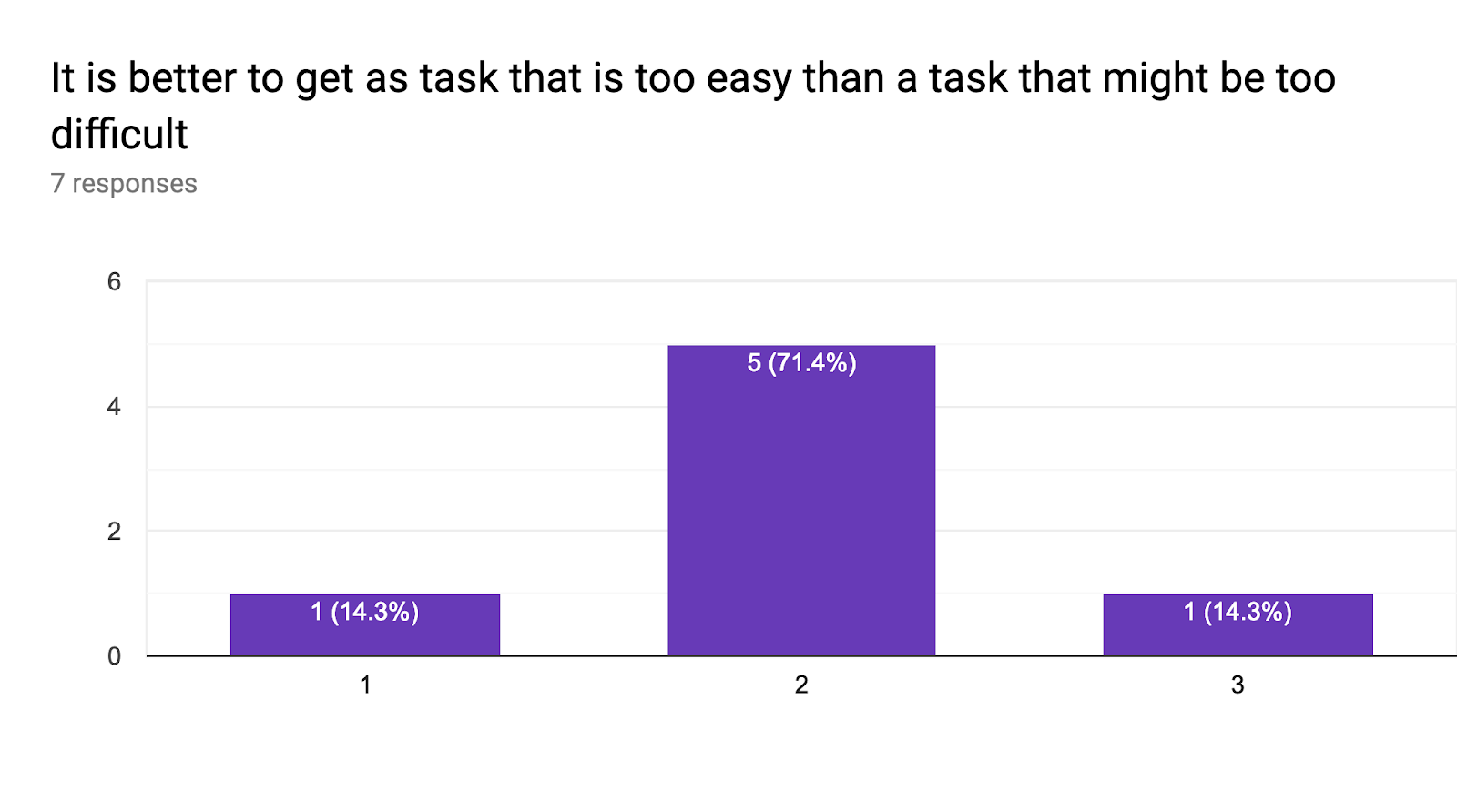
Forms response chart. Question title: It is better to get as task that is too easy than a task that might be too difficult. Number of responses: 7 responses.

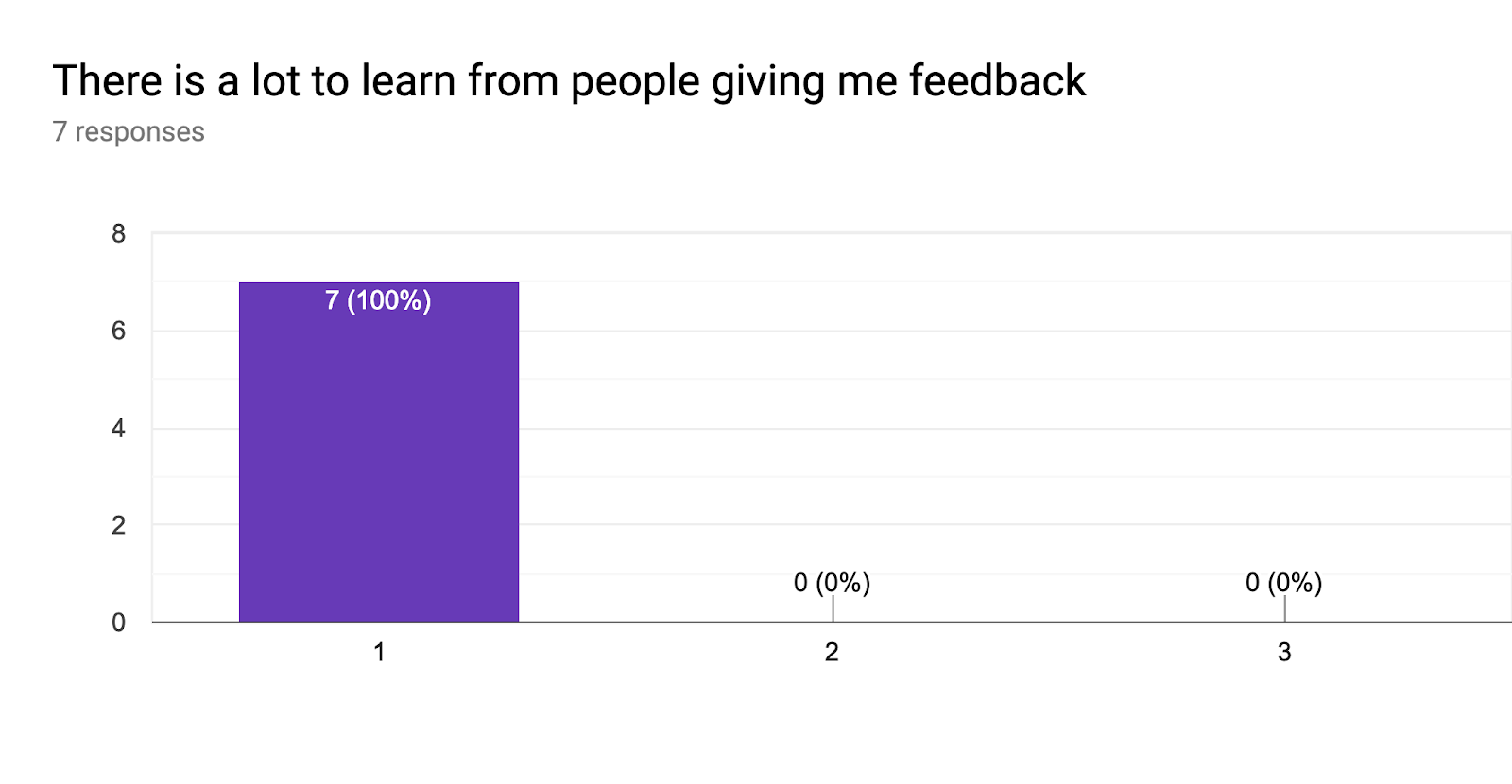
Forms response chart. Question title: There is a lot to learn from people giving me feedback. Number of responses: 7 responses.

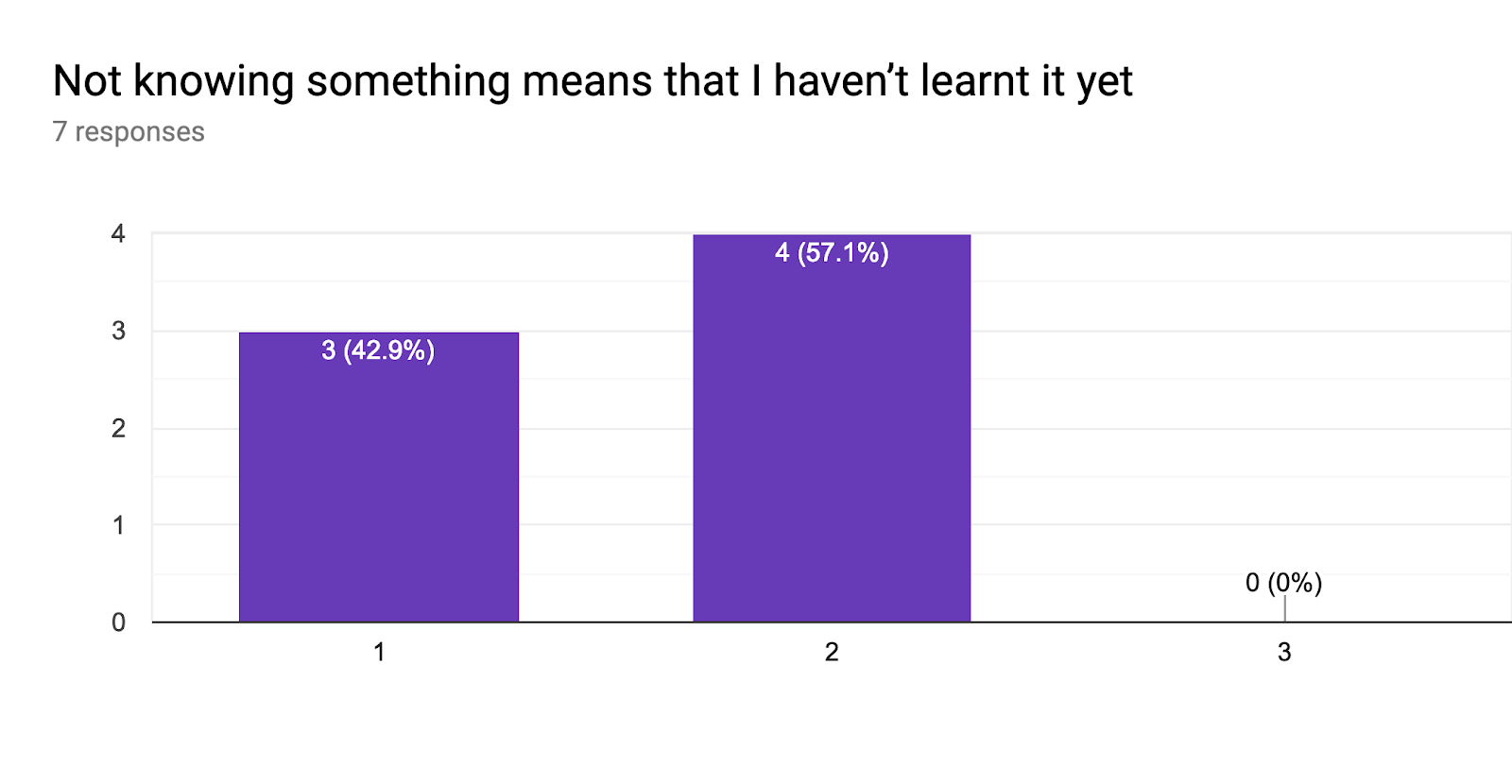
Forms response chart. Question title: Not knowing something means that I haven’t learnt it yet. Number of responses: 7 responses.

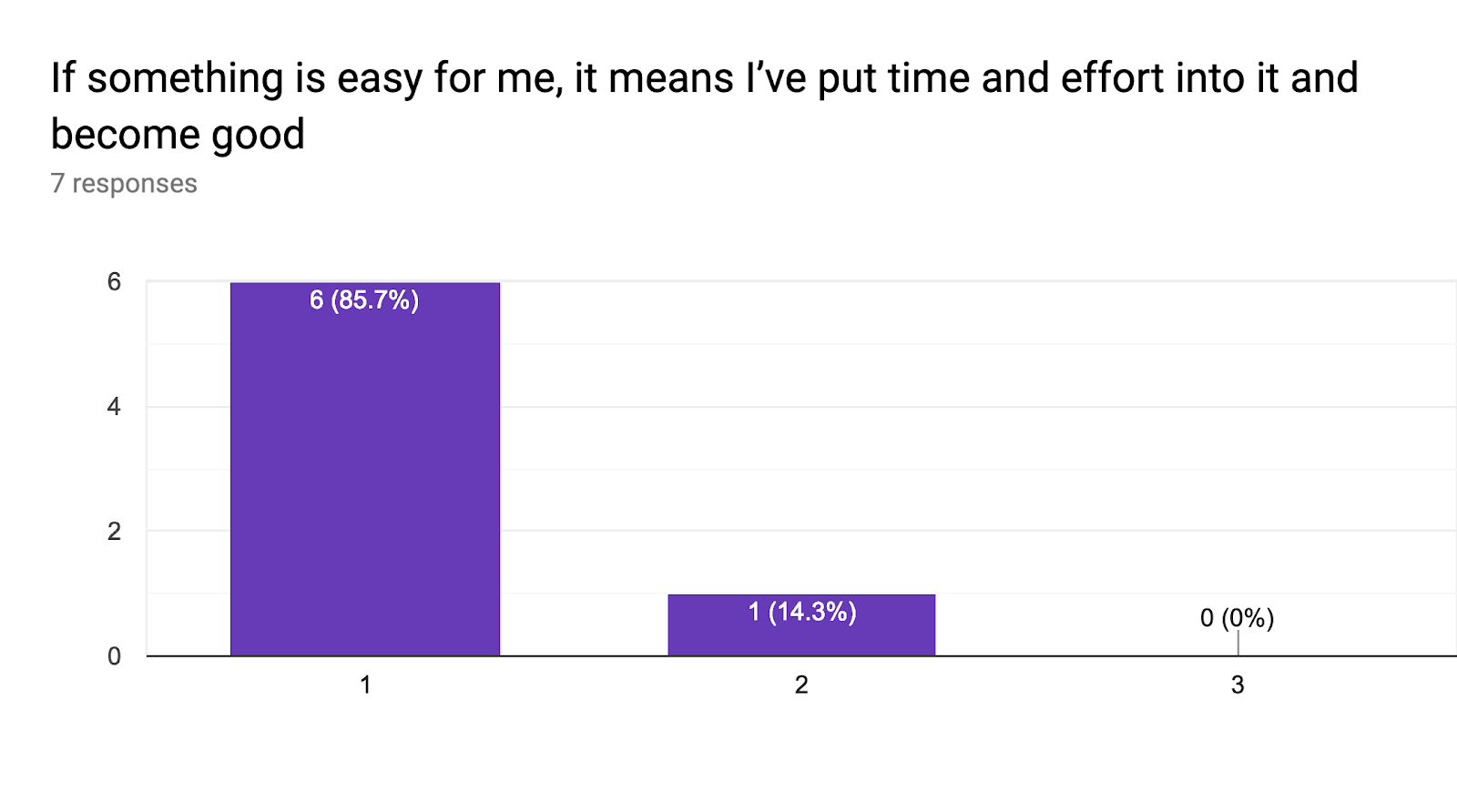
Forms response chart. Question title: If something is easy for me, it means I’ve put time and effort into it and become good. Number of responses: 7 responses.

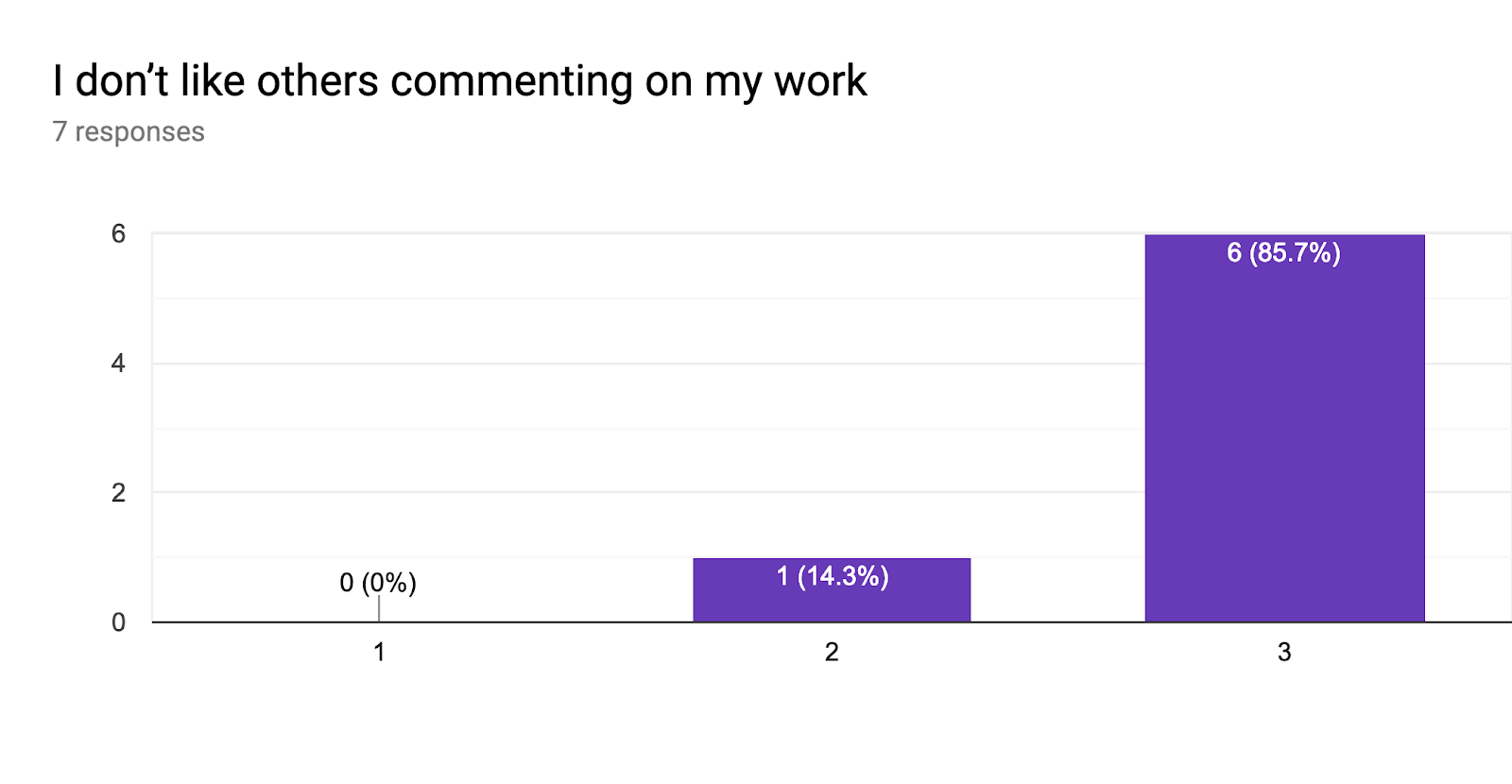
Forms response chart. Question title: I don’t like others commenting on my work. Number of responses: 7 responses.

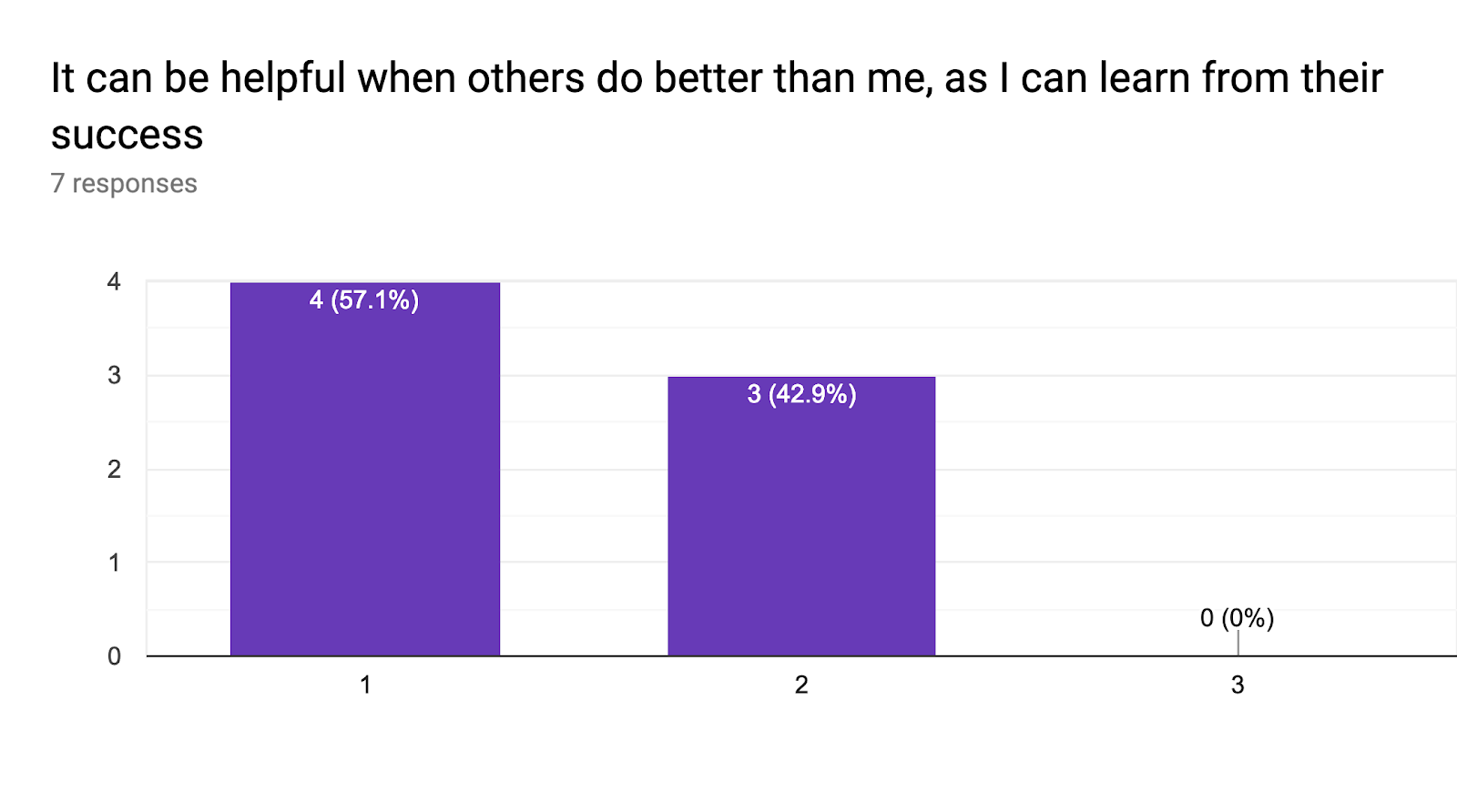
Forms response chart. Question title: It can be helpful when others do better than me, as I can learn from their success. Number of responses: 7 responses.

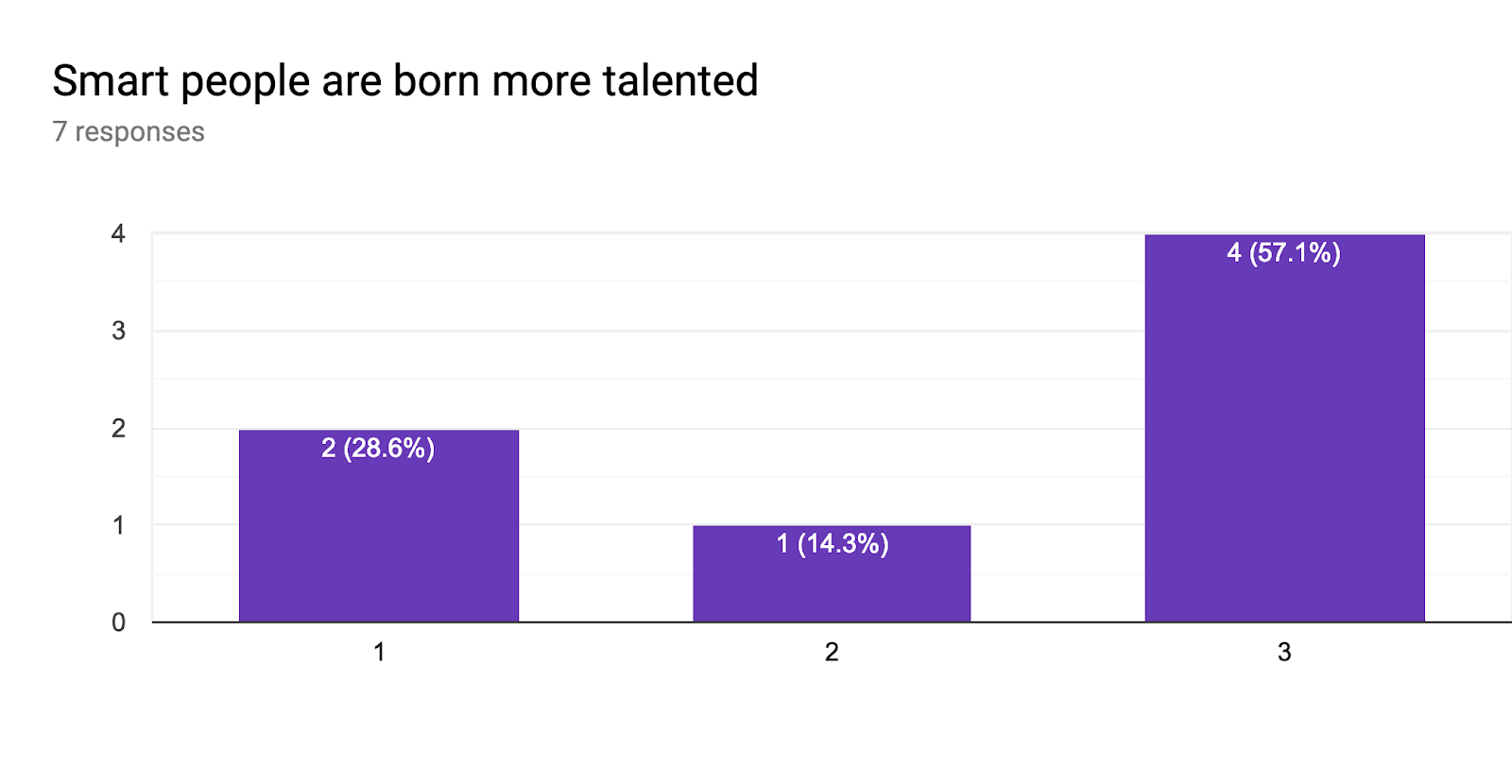
Forms response chart. Question title: Smart people are born more talented. Number of responses: 7 responses.

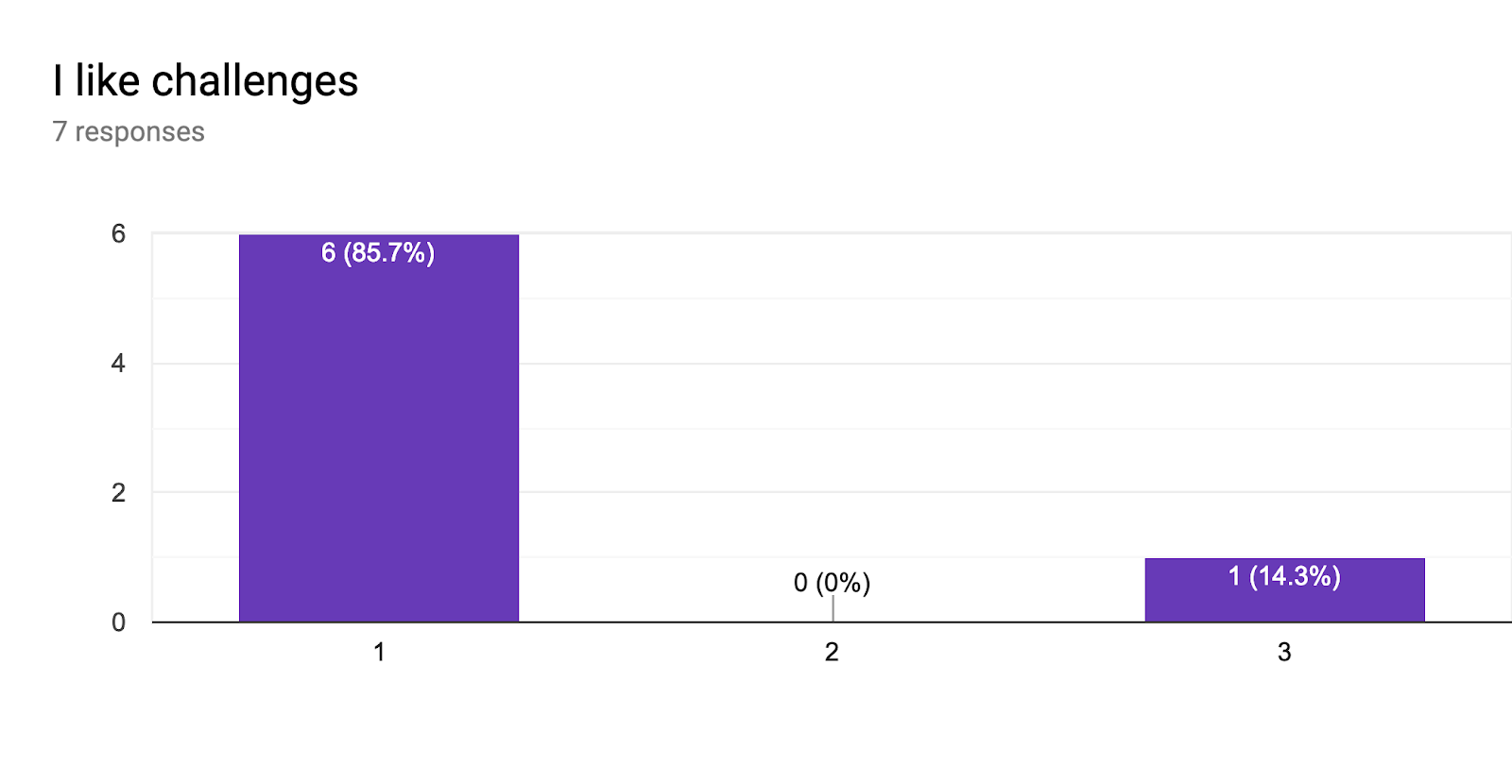
Forms response chart. Question title: I like challenges. Number of responses: 7 responses.

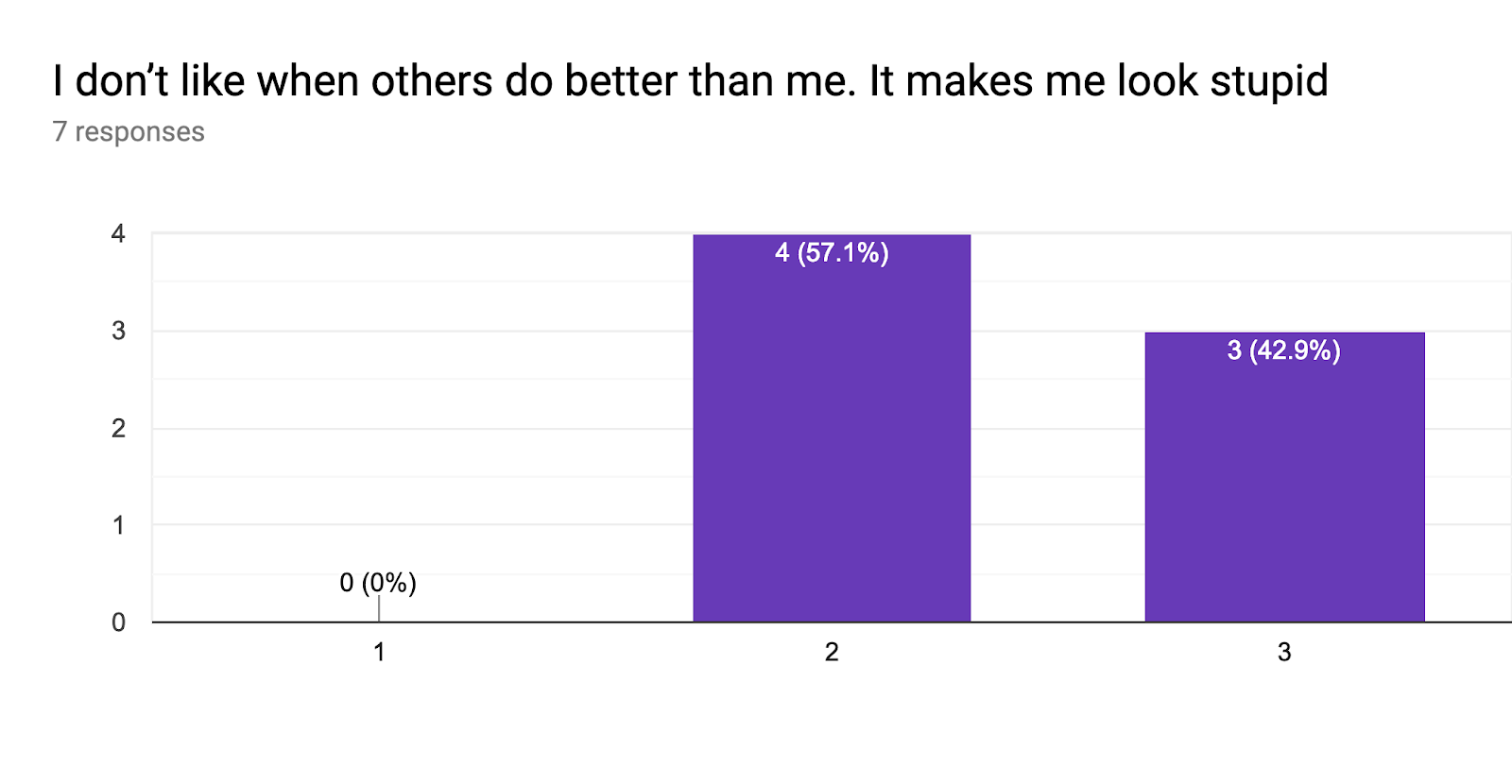
Forms response chart. Question title: I don’t like when others do better than me. It makes me look stupid. Number of responses: 7 responses.

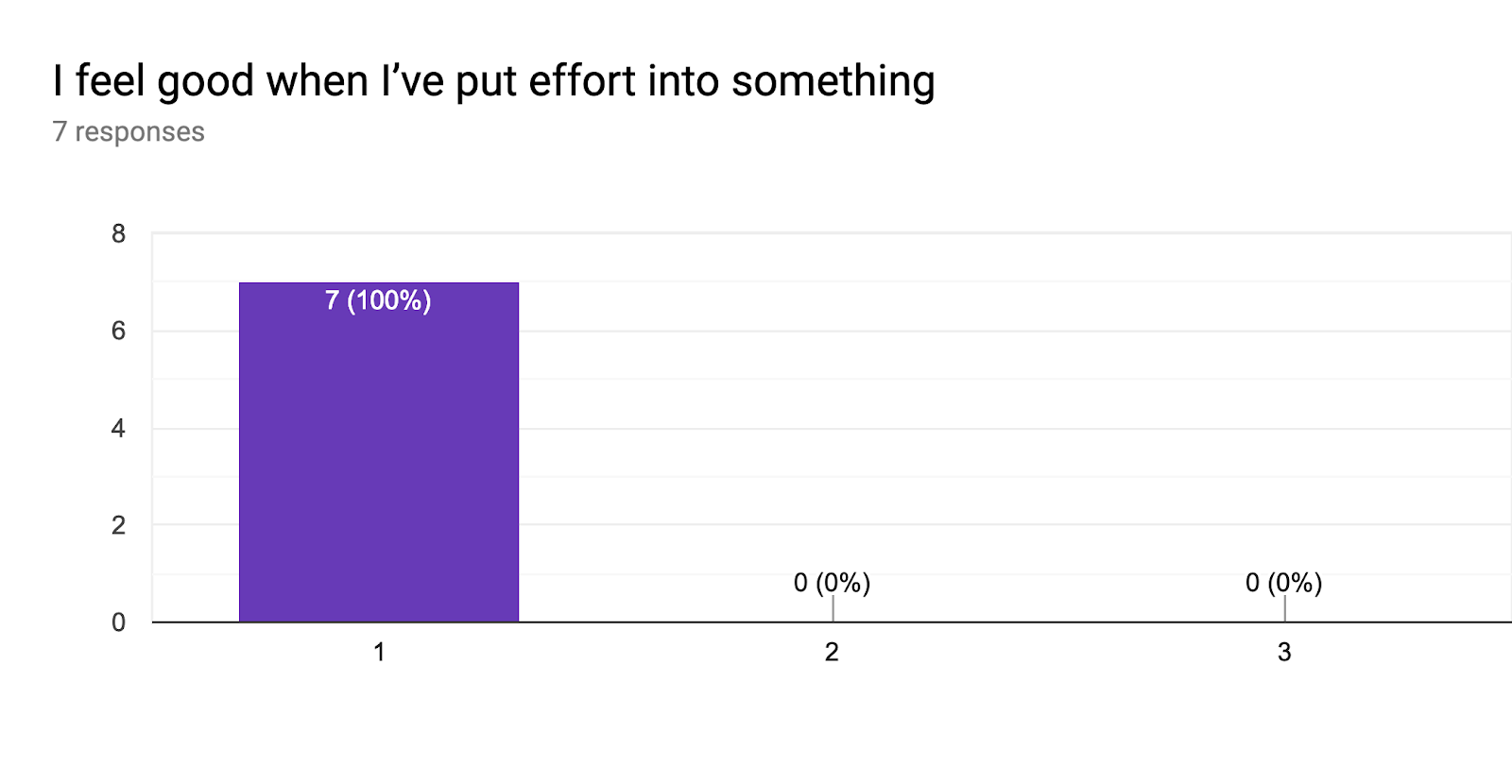
Forms response chart. Question title: I feel good when I’ve put effort into something. Number of responses: 7 responses.

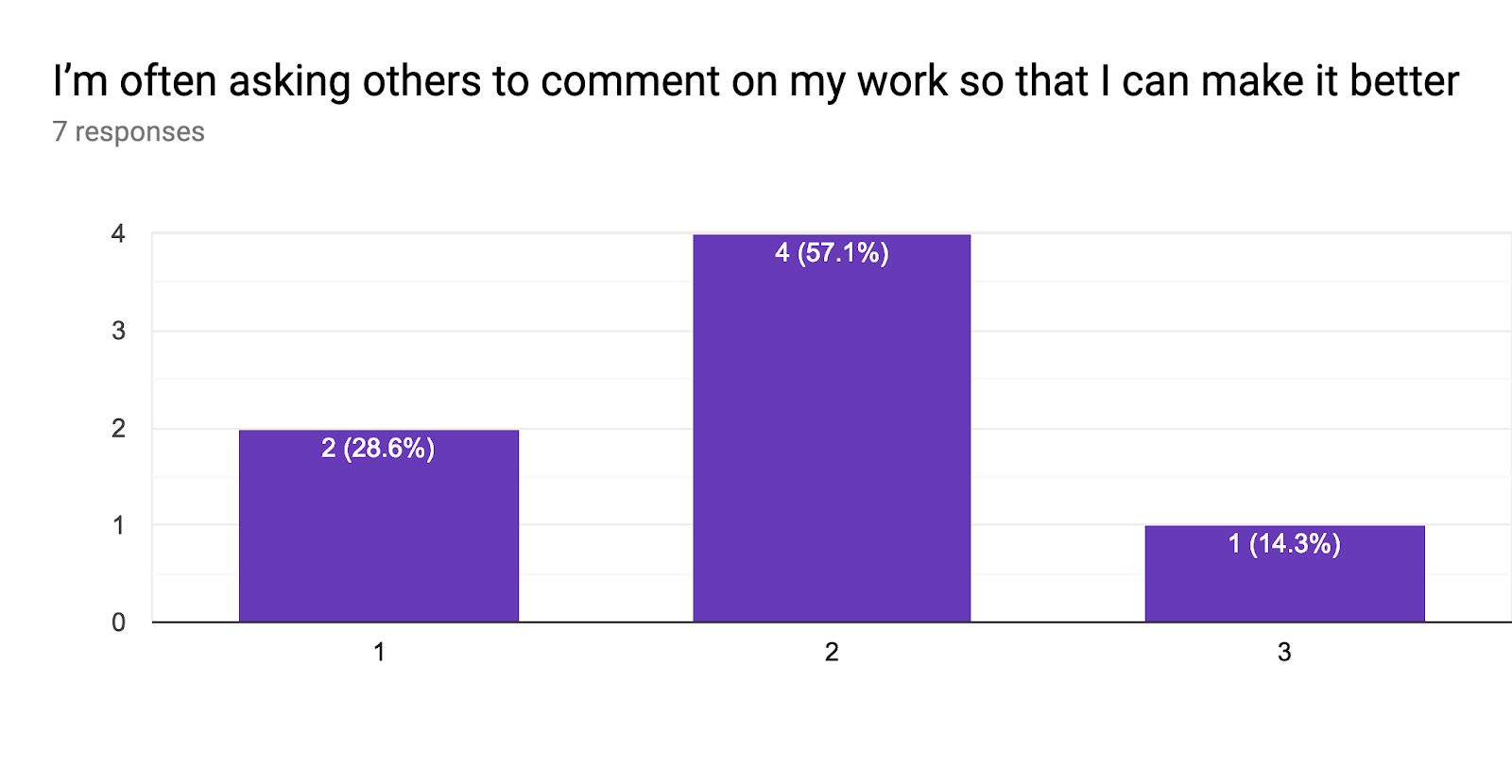
Forms response chart. Question title: I’m often asking others to comment on my work so that I can make it better. Number of responses: 7 responses.

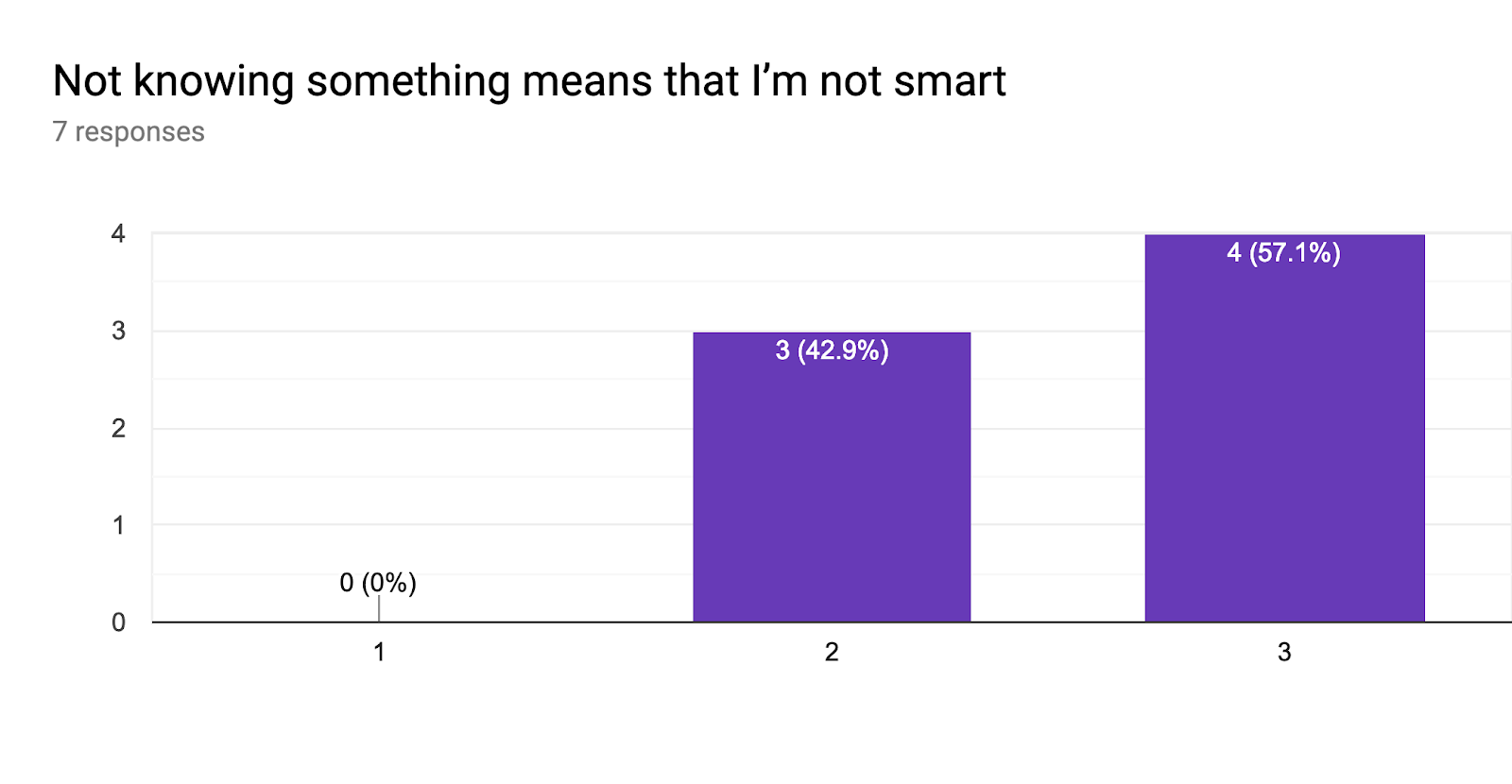
Forms response chart. Question title: Not knowing something means that I’m not smart. Number of responses: 7 responses.

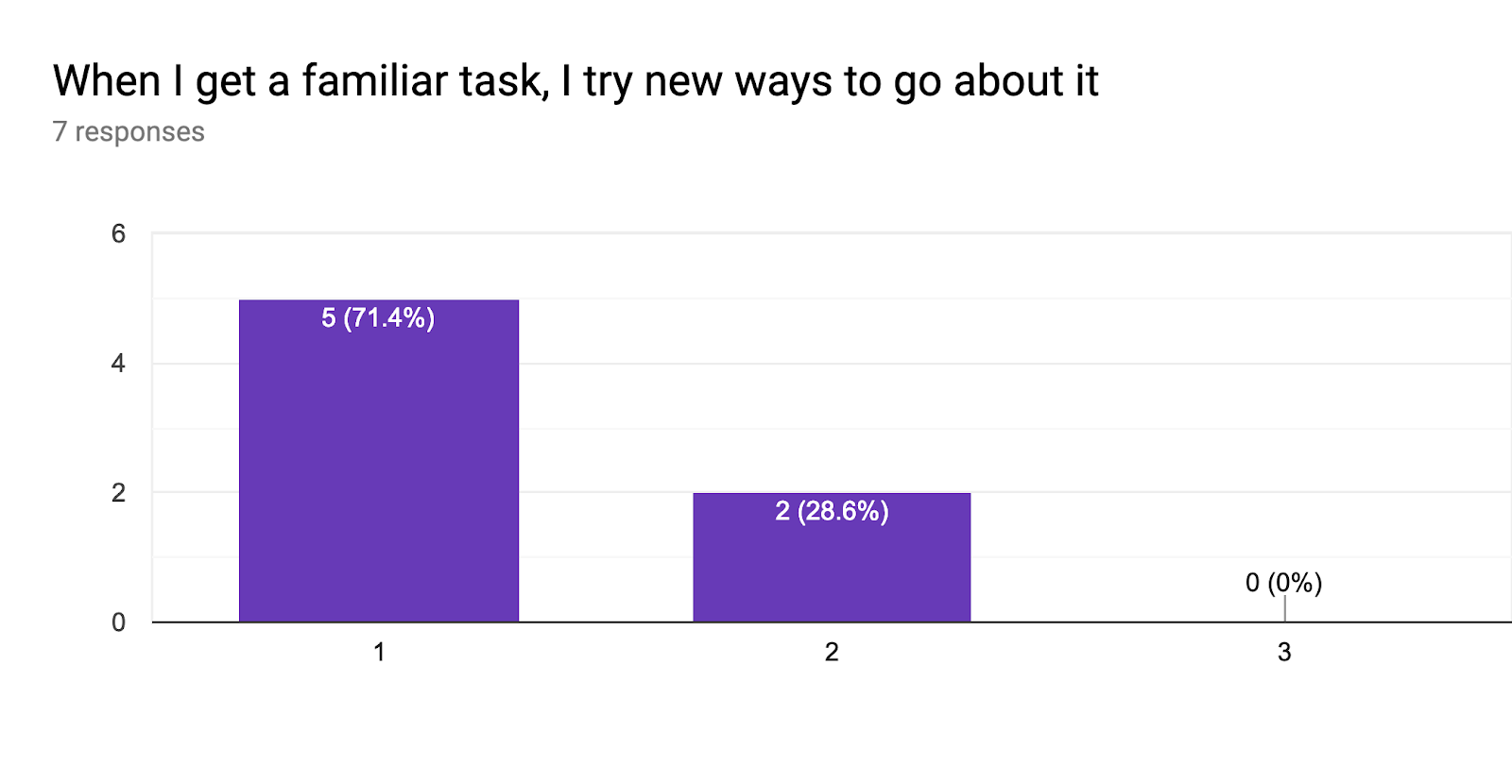
Forms response chart. Question title: When I get a familiar task, I try new ways to go about it. Number of responses: 7 responses.

Expectations

3 things that I am hoping to achieve are...7 responses
Credits, confidence in presenting, learn new aspects relative to design.
E endorse, Completion in work, Schloarship
Endorsement, UE and Get skinny with a six pack n get bulkier
Credits, Knowledge & better skills
Better Drawing skills, Find what media i like the most, and get all my assessment done.
Drawing, searching and painting
Excellent endorsement, university rank score, money.


2 things that I am most worried about are....7 responses
Level of achievement may not be suitable to me, and having to miss out on 10 days of school work when I'm out for Spirit Of Adventure.
My laziness/distraction, not achieving my goal
not achieving it and dying
Getting feedback & not finishing on time
My confidence in drawing and my drawing it's self
Working
failing, not reaching the rank score


1 thing that is most important to me in this course is...7 responses
It will help me develop the skills and knowledge I need for what I want to become in the future.
Scholarship
Growth
Getting familiar with the topic and it's physical attributes
Getting better at drawing.
Doing graphics
Passing


Building success

3 things that will help me to be successful and achieve in this class are...7 responses
Guidelines, detailed information, friends/classmates.
listening, doing my work, asking for help
Discipline, Dedication and Sacrifice
My teacher, my work ethic & my support from my friends ahah
You do to learn, you keep going to learn and you live and learn.
Focus, listen,pay attention
Listening, positive mindset, encourgment


2 things that teachers need to know to understand me are...7 responses
I'm a quiet achiever, I can observe and learn
i am easily distracted, but i try my best
Takes time to understand, I work hard if you stay on me
I get distracted easily when tired
when im not good at the particular topic i shy away from it
my confidence in drawing and my lack of responsibility.
Reapeting it again
nothing, nothing


1 thing that is most important to my learning is..7 responses
My chromebook
succeeding in difficult times
Getting Something out of it
Passing and enjoying the subject while im at it
To appreciate my own drawing
Working
passing


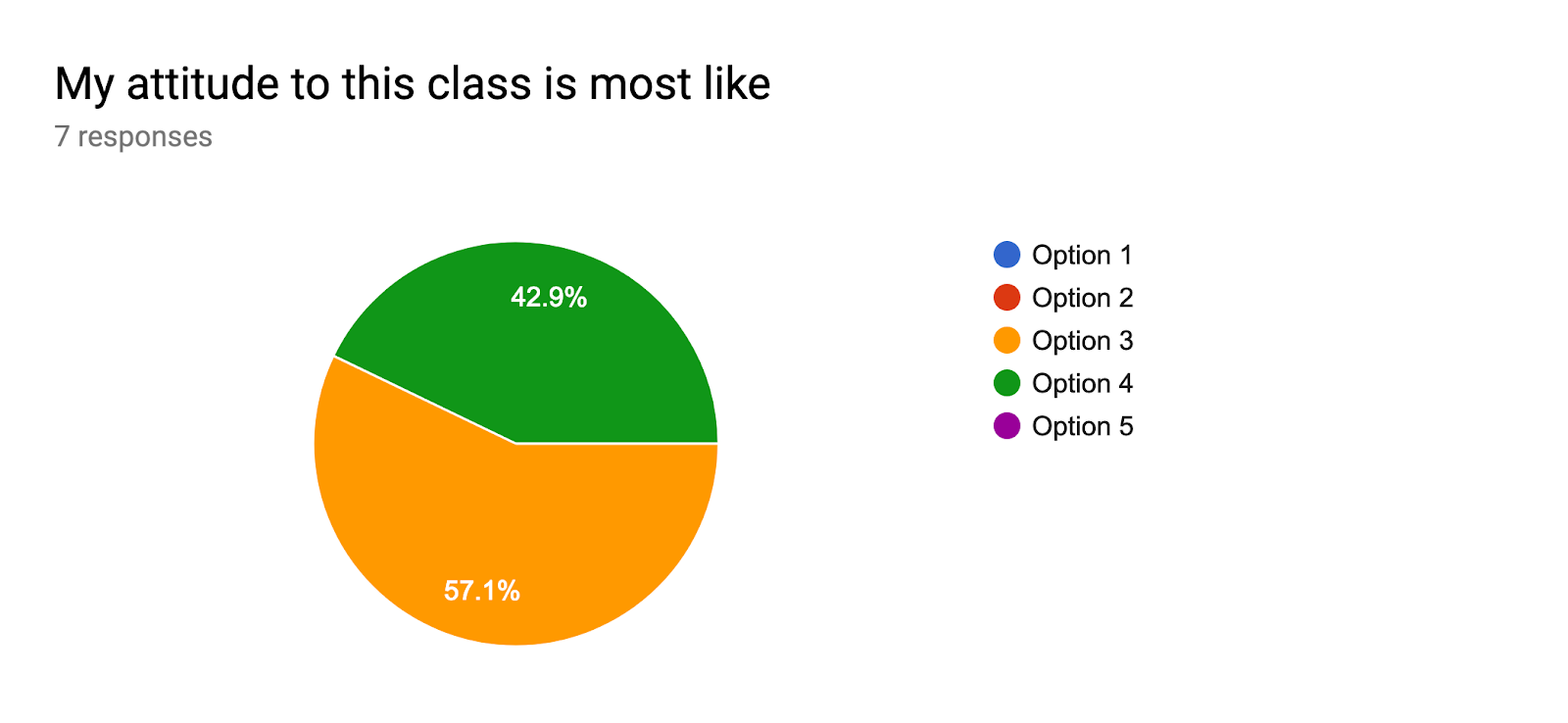
Forms response chart. Question title: My attitude to this class is most like. Number of responses: 7 responses.