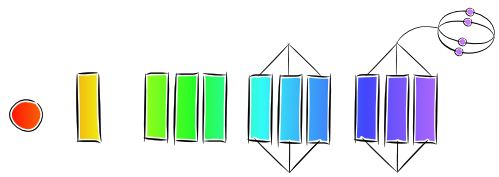
My Year 11 DVC class are starting to do prodict analysis as part of their design project. In order for us to have some practice at doing this, I have decided to use the class blog so we all pratice analysing the same products while being able to see each others analysis. This is a follow on from when we used Google Plus communities to suport each others analysis work. Link to blog post here. I like to use SOLO to structure the questions as it builds up the complexity nicely.
We continued doing this as a class even when they stopped the communities. We sat around the front and did it all together on the TV screen.
This week, I put up one image of a procuct onto the class blog. Along with this, I put a set of questions that the students have to answer in the comment section of the blog. These questions still use SOLO as the structure. I have been publishing the comments as soon as the students have completed the task so they can see each others analysis. I am aware that they can copy by dong this but I want them to feel confident when they have to write an analysis. As we get more practice, I will keep all the comments unpublished untill they are all done.
I am busy putting together all my planning for next year so that I can get it all moderated and ready to go in the new year. I am currently working on the product design project for Year 12. They need to look at existing products and analyse them so I have structured this around the SOLO Taxonomy levels. This task then starts with some simple labelling and identifying and slowly builds the complexity of the questions to add more depth as they go.
I am hoping that if this is a smooth process for the students, then we can do something similar in structure along with all the literacy structure for the analysis of their own design ideas. This is the part that they always find difficult and I am constantly working on trying to improve.
I have a blank description burger on a Google Drawing that I thought we could adapt and use for product descriptions. I adapted this burger drawing from one that is in The Writing Book.
I used this to make an example to show the students and take them through the process.
After talking to Cheryl (the school's specialist classroom teacher) about my plan and showing her my initial scribbles on paper, she gave me some great links and ideas that I could include.
One of these was this document, the Q-matrix, with focus questions.
I used this to help me put together this support document for the students, where they could take questions from here to help them when doing their own burgers.
I put all of this support material into the class Google Plus Community so it was easily accessible. I also supplied 3 simple images that they could choose from for their descriptions if they had trouble deciding on one for themselves. As usual, too much time was spent on this decision than the important parts of the task!
Today was a single period, so the students have not quite completed their burgers. When I see them next, they will finish them off then make short videos on the class iPads, explaining their burger so they are verbalising their analysis and descriptions as well as typing them.
Here is a video of the start of the lesson where I was going through my example.
Here is a short clip of the students getting underway with this exercise.
I had a really good meeting with +Cheryl Harvey (specialist classroom teacher) today about various things and one of them was finding reading activities about design for my students to use.
She suggested that we have a look at the exemplars on the NZQA website for the standard that the students have just started. Link to exemplar work on the NZQA site here.
She said it is good for students to see the work of others across New Zealand. This also fits with what I saw happening in the classroom of +Robyn Anderson when I went to visit her. Blog post here.
I decided for their first reading task, that I would isolate just one design from each level, via a screen shot, and type up the student notes with that design, rather than have my students try to read the hand writing on the examples.
I am going to also copy what Robyn did in regards to printing these out and getting the students to highlight key elements with highlighter pens.
Design terms, sentence connectors, descriptions, reasons given for decisions made etc.....
We started this today, and I put a simple product up on the screen for the whole class to discuss together. I split the question up into SOLO levels and colour coded what the students said appropriately to these levels.
The class were a bit shy about doing this for the first time today, but I hope they will get more confident about it as we go, as my plan is to do this all together as a whole class at the start of each lesson for quite some time. Link to Google Drawing here.
I then shared this Google Drawing into the class Google Plus Community so they can refer back to it and remind themselves what we did.
I hope that this makes the language of describing and explaining products and design work becomes what they use in a more natural manner. This then will feed into the analysis that they have to do about their own design work.
The students are round the front table very briefly so they can be reminded as a group about what we have covered in the design analysis exercises and they can see the relevance to the analysis that they need to do to their own designs now.
Stress is given to the main elements that are important in their analysis, especially the WHY of the design decisions that they have been making.
The students then get on with their individual work where one to one help and support is given where needed.
Here is the direct instruction given to the whole class where we remind ourselves of the work we have covered in the design analysis exercises and stress the important elements that need to be included in the design analysis of their own work.
This is some clips of various lessons where I am working one to one with the students on their individual design work.
Here are some of the students talking about their analysis work.
Detailed Lesson Plan
Lesson Topic :- Product Design Analysis Team Work
Year Group :- Year 11, 12 and 13
Learning Outcome
The students will be able to analyse their own design ideas using the skills gained in the previous exercises.
These have not changed a great deal in the last few lessons as we are still doing design analysis which incorporates the same skills and levels in SOLO.
The focus of this work has been changing and the depth that we have been doing it has been increasing.
The focus is now on their own work so the success criteria is more specific now towards that.
Uni
structural
Multi
structural
Relational
Extended abstract
Students can identify the main parts of their own designs.
Students can describe and list the design elements, properties, how it will be used and materials used in a design.
Students can describe how materials have been combined together on their design ideas.
Students can explain and compare elements of their design ideas to show how they work together and the effects that they have.
Students can explain why materials have been chosen and the properties that they have to make them suitable for the job.
Students can evaluate their own work and reflect on where design decisions have been made and generalise on why they were made. They can imagine where improvements can be made and can evaluate what effects these improvements would have on their design.
Achievement Objective: Outcome development and evaluation
Critically analyse their own and others’ outcomes and evaluative practices to inform the development of ideas for feasible outcomes. Undertake a critical evaluation that is informed by ongoing experimentation and functional modelling, stakeholder feedback, and trialling in the physical and social environments. Use the information gained to select, justify, and develop an outcome. Evaluate this outcome’s fitness for purpose against the brief. Justify the evaluation, using feedback from stakeholders and demonstrating a critical understanding of the issue.
Thinking - analysing their design work based on a focus.
Using language, symbols, and texts - talking about their ideas for the analysis.
Managing self - Using the RISE values when doing this work on their own and staying on task.
Participating and contributing - Giving suggestions to the whole group. Listening to the suggestions of others. Using these suggestions with their own work.
Relating to others - responding to the ideas of others in a positive way.
Prior knowledge
The students have been working through a series of exercises about design analysis based on the SOLO taxonomy structure.
They have design developments and / or final designs to write a written analysis for.
Lesson Sequence
Session Outline
This work will start all together to remind the students of the exercise activities we have been doing to build their analysis skills.
They will move onto individual work where they will be writing analysis notes about their own design work.
Student Activity
Teacher Activity
Sit round the front table and talk together about the analysis skills that we have been using over the past couple of weeks.
Talk through the previous exercises with the students, with prompts to remind them what we did and why we did it.
As the students are getting on with their own design analysis work, sit with them and provide one to one help where needed.
Check through written work on Google Docs as they are doing it to provide suggestions and support.
Scan student's work when complete and upload to the class Google Plus Communities
The students will use their own design ideas - both design developments and their final designs, depending on where they are up to.
Write analysis notes to go with all of their design work using the skills we have been building.
Share ideas to the whole group about what we have been doing to remind themselves and others of the skills we have covered.
Design work and notes to be scanned and uploaded to the class community - look at each other's work and read each other's notes.
Resources
Google Plus Communities with previous resources in for them to refer to.
The students need to write analysis notes on all of their design developments and their final designs to show their thinking.
Reflection and Analysis
What went well.
The one to one work with the students while they were working on their own design developments went really well as we could dig deep into their individual needs for each design. I could ask them very specific questions geared towards their work, not just generic ones for the whole class. The exercises and work we have been doing to build up towards their own analysis has really helped as they were able to tailor what we have been doing to their own work.
What still needs work.
The exercises and support work we have been doing in the last couple of weeks needs to start much earlier in the projects. We need to start doing this at the beginning of the project when we are starting to look at design work done by others.
Year level specific support documents could help the students while they are getting on with their work. It is difficult for me to get round too many of them during a lesson as the work we are doing is in depth.
I had my new Year 9 class for a double period today. We have started our clock design project and all we have done so far is to collect images of different types of clock.
What we moved onto today was a kind of pretest (without them knowing that's what it was) to see where they are in their vocabulary knowledge. We used SOLO hexagons to write down everything they could see in their collection of clock images. We then grouped them together in groups of their own choice and they had to explain why they had put the groups together.
The students worked in pairs for the activity and we all had a go together at the start, with them calling out suggestions to the whole class.
This gave me a lot of insight into the variation of the knowledge around the class. One student came up with the word "analogue" and "digital" with no prompting while others struggled to know what the hands of the clock were called.
I hope that starting early with the vocabulary like this, it will help them later when we start to describe their design ideas.
Direct instruction for this activity involved the students being round the front desk all together for the first 5 - 10 minutes of each lesson.
On the board each day, a picture of a different product is displayed for the class to talk about.
The questions are given verbally by the teacher and the class talk about the answers to these questions. There is no writing or typing involved from the students. They have to make suggestions them selves or listen to the input from others in the class.
These videos show the direct instruction at the start of each lesson. We spend 5-10 minutes analysing a different product each day. These videos are not all of our sessions, just the first few. As the videos progress, the students find it more difficult and this is a good thing as we are analysing deeper. The first video is shown here and the other three are links that show analysis of different products and at different depths of thinking.
These were the products that were discussed by the students each day.
This feedback is from some of the Year 11 group. We had gone through what I was going to ask them and they had practised what they wanted to say. Then when we filmed, they forgot some of the plan. It appears like I am leading them a little but I am just reminding them of what they had already decided they wanted to say.
Detailed Lesson Plan
Lesson Topic :- Product Design Analysis Team Work
Year Group :- Year 11, 12 and 13
Learning Outcome
The students will be able to analyse existing products in increasing amounts of depth.
The students will be able to give their ideas and opinions in front of the rest of the group.
The students will listen and understand the ideas and opinions of others in the class.
These have not changed much in the last two lessons as we are still doing design analysis exercises which incorporate the same skills and levels in SOLO.
The focus of this work has been changing and the depth that we have been doing it has been increasing.
Uni
structural
Multi
structural
Relational
Extended abstract
Students can identify the main parts of a design.
Students can describe and list the design elements, properties, use and materials used in a design.
Students can explain and compare elements of a design idea to show how they work together and the effects that they have.
Students can evaluate the work of others and reflect on where design decisions have been made and generalise on why they were made.
Achievement Objective: Outcome development and evaluation
Critically analyse their own and others’ outcomes and evaluative practices to inform the development of ideas for feasible outcomes. Undertake a critical evaluation that is informed by ongoing experimentation and functional modelling, stakeholder feedback, and trialling in the physical and social environments. Use the information gained to select, justify, and develop an outcome. Evaluate this outcome’s fitness for purpose against the brief. Justify the evaluation, using feedback from stakeholders and demonstrating a critical understanding of the issue.
Thinking - analysing the design based on a specific question or focus.
Using language, symbols, and texts - talking about their ideas for the analysis.
Managing self - Using the RISE values when doing this work as a whole group.
Participating and contributing - Giving suggestions to the whole group. Listening to the suggestions of others.
Relating to others - responding to the ideas of others in a positive way.
Prior knowledge
The students have been drawing their design developments for their Product Design project.
We have been doing analysis exercises together on the class Google Plus Communities.
We have been talking about and using analysis focussed vocabulary.
We have made a start on analysing their own design development work.
Lesson Sequence
Session Outline
The point of these short sessions is to spend 5 -10 minutes all together at the start of each lesson to verbally analyse a product.
The product will be different each day.
The focus questions for the analysis will start in the unistructural and multistructural levels of SOLO and slowly build in complexity each day and each product.
The outcome is hopefully the students will be less worried about analysis as we are doing it regularly all together and showing the depth that is needed.
Student Activity
Teacher Activity
The students sit round the front table for 5-10 minutes at the start of each lesson.
They look at a different product each day and analyse what they see.
Project the product to analyse that day on the main board.
Ask the focussing questions for the product that day.
What shapes can you see?
What forms can you see?
What colours / textures can you see?
What materials have been use?
What properties do the materials have that make it suitable?
How is the design used?
How is is been designed to be safe?
Record the answers that the students have given on a Google Drawing with the picture of the product and share this on the class communities for the students to refer to afterwards.
Think about what they are looking at in terms of what questions the teacher is asking them.
The focus for the product each day will be different, with an increasing level of depth, so they need to make sure they concentrate on the day’s product and analysis focus.
The students are doing this exercise every day verbally, so they need to speak in front of the rest of the group and listen to what everyone else has to input.
Students need to analyse their own design development work as they produce it. They need to go into enough depth so it is obvious what design decisions were made and why they were made.
Reflection and Analysis
What went well.
We have been doing this exercise everyday for a week at the time of writing this. The students have got used to what we are doing and understand why we are doing it. They come round the front table at the start of the lessons without too much nagging as they are coming in expecting to do the analysis exercise together.
They are giving input to the sessions well and are listening to each other in a respectful way.
We have been going into greater depth on each product analysis that we have done, and while the students have quite often struggled with the questions that I have been asking them, they have not given up and have offered suggestions.
What still needs work.
As I have realised recently that there is an issue with vocabulary, I should have been writing up the keywords the students were suggesting as they were doing it instead of afterwards. This would maybe have given these words more importance.
We need to try and move the depth of the answers into the extended abstract area of SOLO, as we have not done this yet, so this will mean some modelling from me so they know what I want them to do.